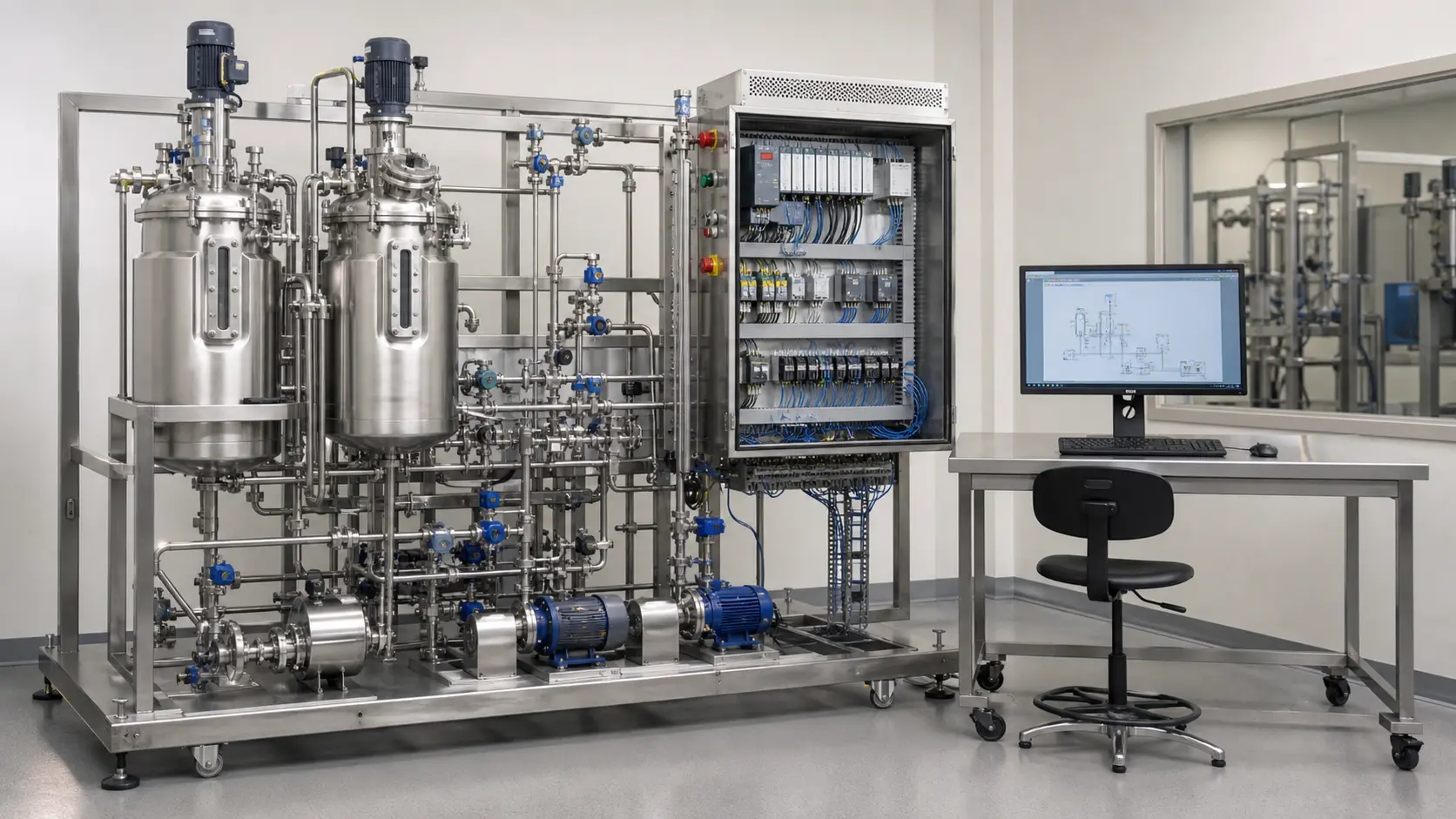
CIP sequencing
Build rinse, wash and verification phases with permissives, timers and controlled fault recovery.
Practise CIP, batching, fermentation temperature, bottling and packaging controls against dynamic process and machine models in a browser-based PLC lab.
Food-process training model
CIP Sequence Controller
CIP rinse, wash and verification sequencing
Batch and fermentation temperature dynamics
Bottling, label, case-pack and pallet flow
Fault, alarm and recovery cases across process and packaging
Process-to-packaging coverage
The scenario path connects sanitary-process sequences to downstream packaging controls so learners see how recipes, timers, sensors, faults and line state interact.
Build rinse, wash and verification phases with permissives, timers and controlled fault recovery.
Coordinate fill, heat, mix, hold and discharge from explicit process state and sensor feedback.
Work with fermentation and PID temperature dynamics instead of static on/off indicators.
Extend into bottling, labelling, case packing and palletising with counts, timing and reject logic.
Scenario library
Commission a complete clean-in-place cycle with timed stages, permissives and fault handling.
Control fill, heat, agitation and discharge as an explicit batch state machine.
Control a slow thermal process with analog feedback and disturbance behavior.
Coordinate a multi-phase temperature and timing schedule across a production batch.
Coordinate filling, capping and product movement across linked stations.
Group products, count cases and recover the packing cycle after abnormal conditions.
Training outcomes
Assignments can grade normal operation, unsafe demands, boundary conditions and recovery behavior against the same machine model.
Scope, stated plainly
These are generic food-process control simulations. They do not validate hygienic design, HACCP plans, recipes, allergen controls, thermal lethality, cleaning chemistry or compliance with a plant’s food-safety management system.
Related training solutions
Go deeper into label, carton, case and pallet machine controls.
Explore solutionExplore qualified batch holds, deviations and record completion.
Explore solutionRehearse startup, alarm and process-upset response.
Explore solutionPilot with your standards
Use the existing labs immediately, then map assignments and pass criteria to the equipment, failure modes and competencies your team owns.
Competency and practice field guide
Direct answer
The learner can map one ingredient or package through sensors, sequence state, controlled equipment, quality checks and a documented abnormal response.
Written for food-plant technicians, controls learners and instructors practicing conveyors, dosing, mixing, heating, cleaning states, alarms and traceable batch decisions.
Product and process requirement, recipe revision, lot context, sanitation state, critical limits, equipment readiness and operator authority.
Material and package flow through sensors, PLC state, valves, pumps, drives, inspection, rejection and retained production evidence.
One repeatable fill, mix, transfer or packaging cycle with correct start, stop, hold and completion evidence.
Missing ingredient, failed temperature, blocked conveyor, rejected package, cleaning conflict, restart and lot change.
A material, sensor, sequence, actuator, sanitation, quality, traceability or operator-response mismatch.
The exercise compared with approved food-safety plans, machine risk controls and target-equipment acceptance tests.
It should connect process sequence, hygienic state, ingredient or package tracking, controls, abnormal response and traceable evidence rather than teaching isolated PLC rungs.
No. It can teach control reasoning and repeatable fault response; production validation requires approved recipes, quality systems, sanitation evidence and target equipment.