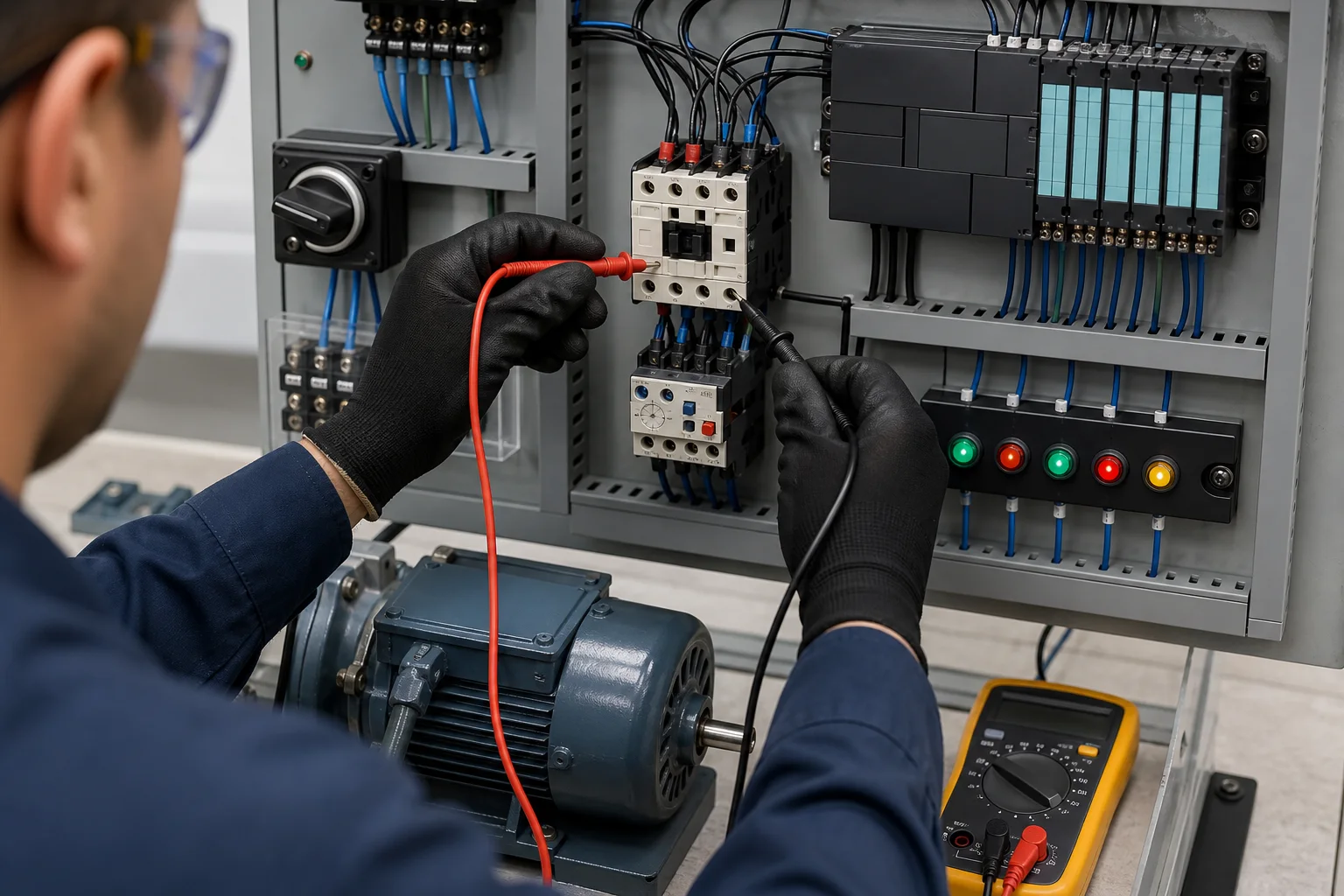
Real machine physics
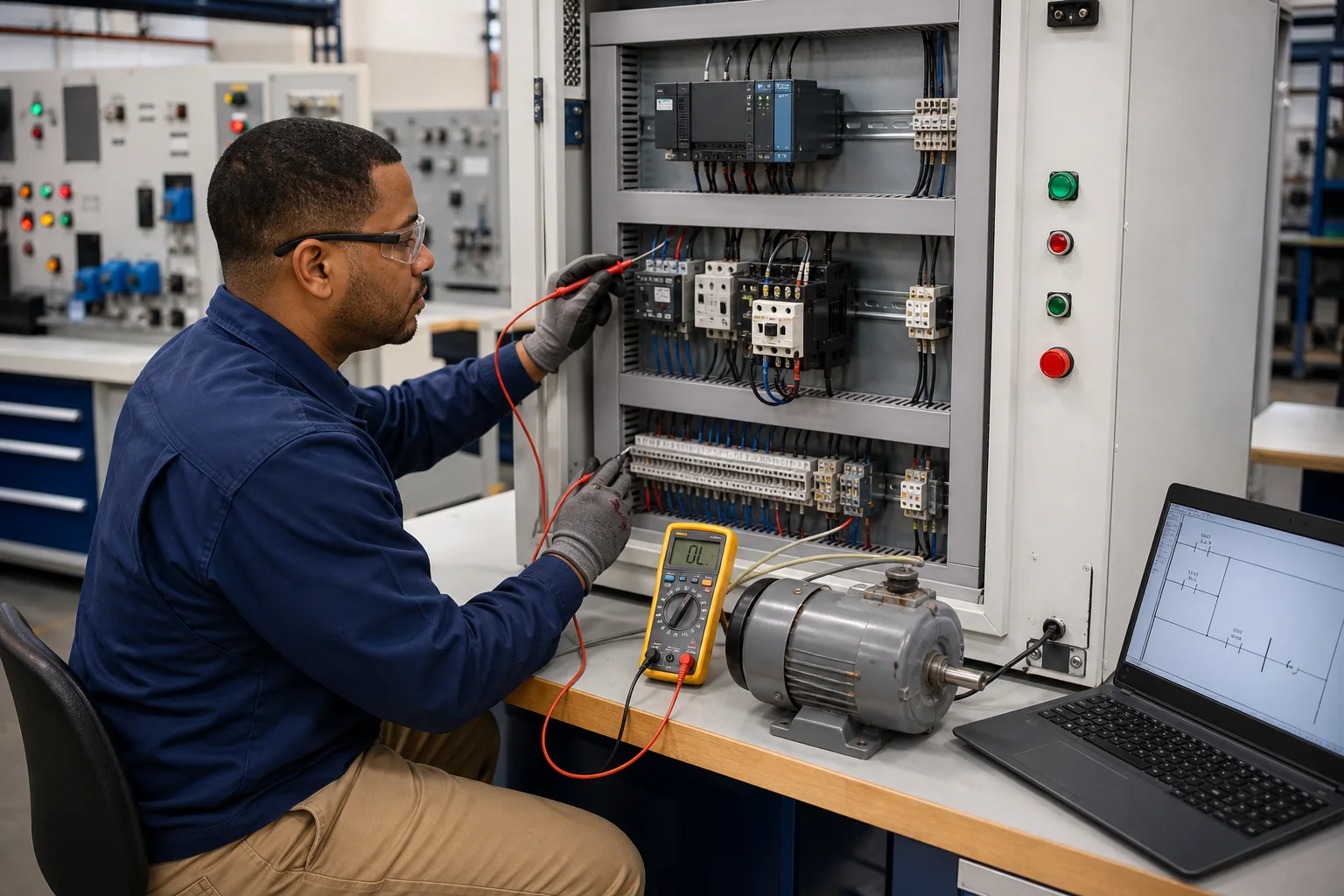
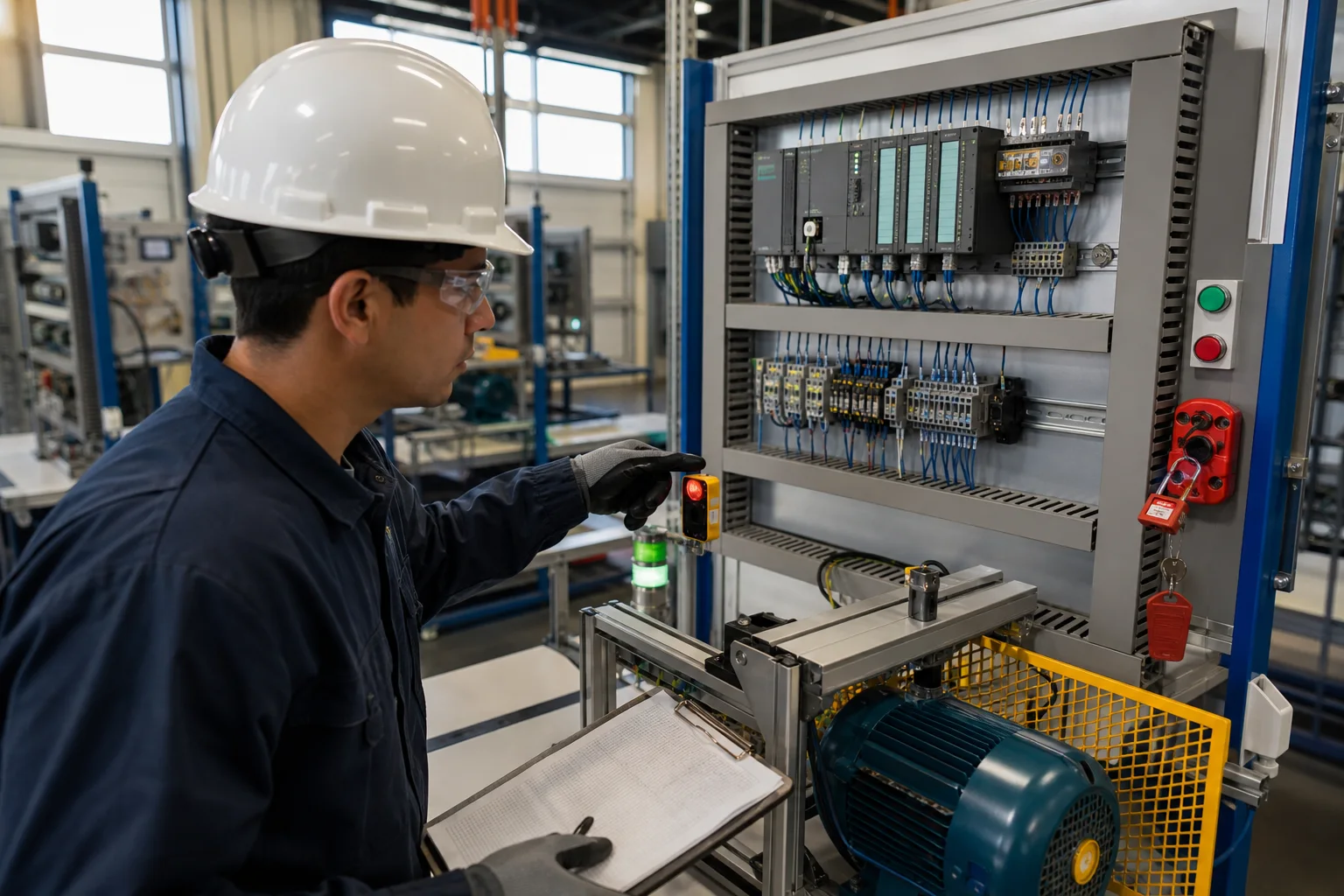
Every scenario simulates real equipment. Tanks fill, motors spin, valves modulate — driven by your actual ladder logic.
A free, browser-based pathway to a PLC technician certificate. Complete 20 lessons, 40 graded machine scenarios, 14 quizzes, and the interview prep track — then download your certificate. No install, no credit card.
What a PLC technician certificate holder should be able to do.
A browser tab that behaves like a real PLC bench — without the hardware budget.

Every scenario simulates real equipment. Tanks fill, motors spin, valves modulate — driven by your actual ladder logic.

Toggle inputs by hand to see how the PLC responds. No wiring, no hardware — just click and learn.

Pass an interview track and earn a downloadable PDF certificate. Pro users get solution walk-throughs with expert commentary on every scenario.
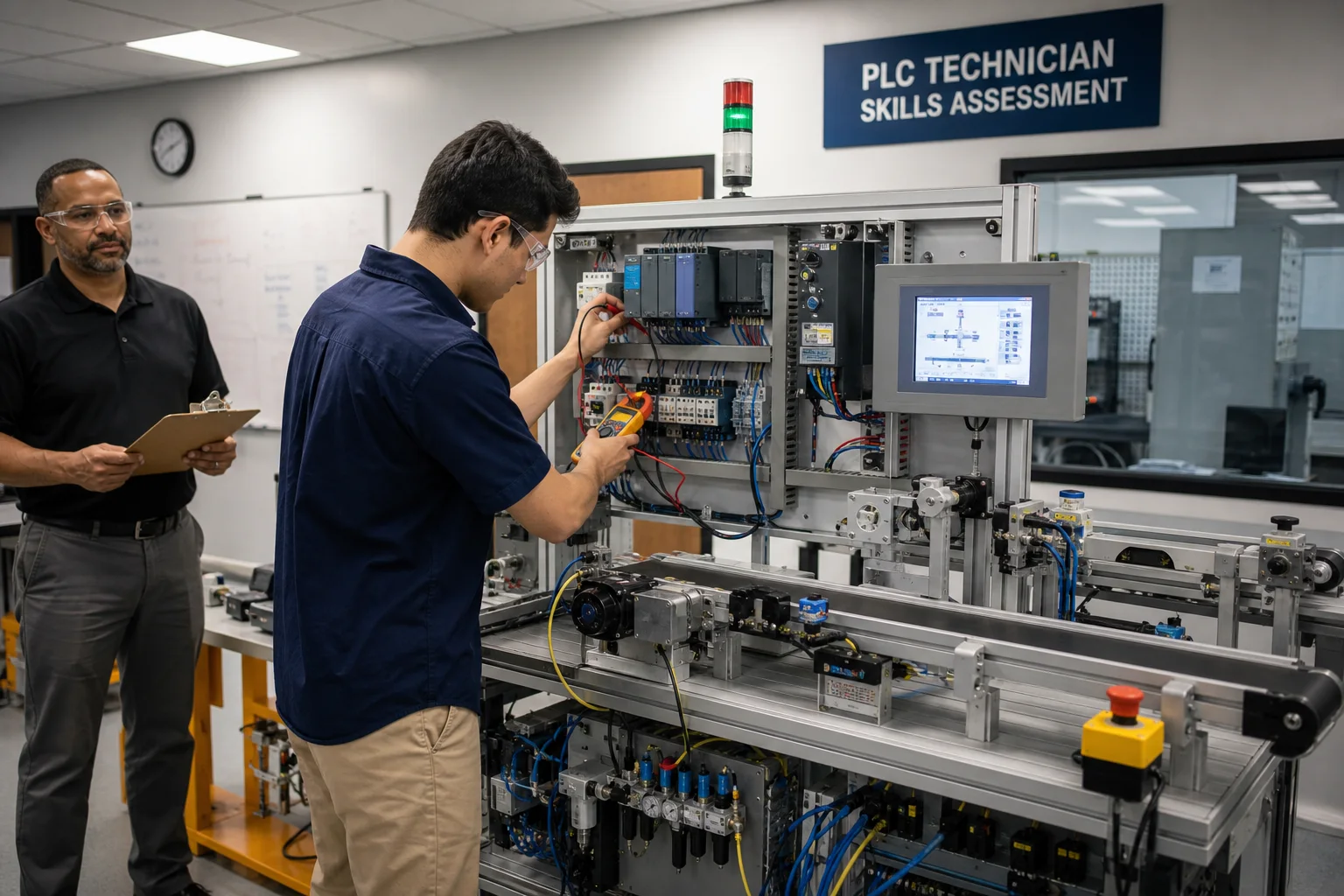
A PLC technician certificate is a credential that confirms a person can programme and troubleshoot programmable logic controllers at a competent working level. The precise meaning depends on how the certificate was earned — and that distinction matters before you invest any time or money.
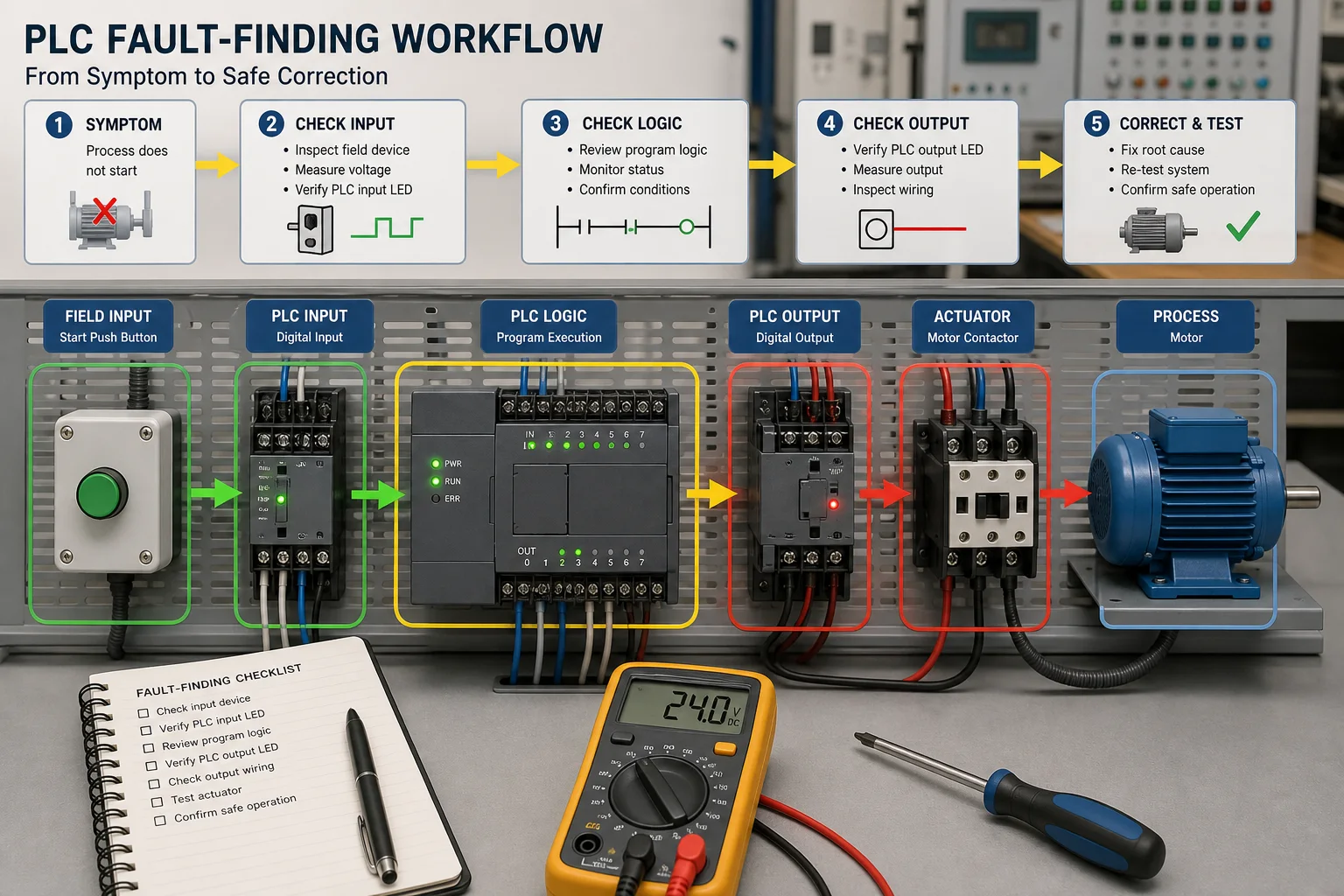
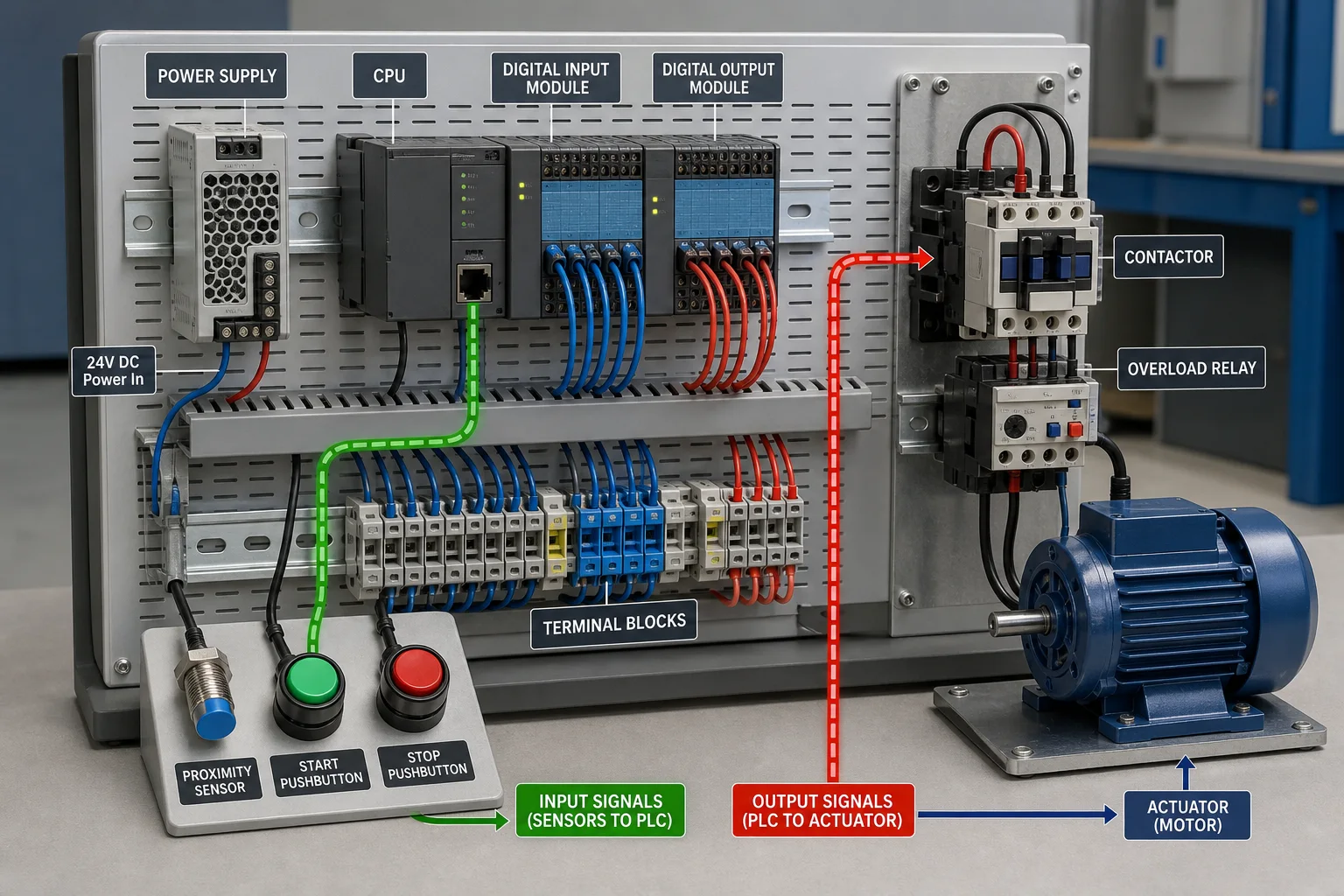
The role itself sits between electrical technician and controls engineer. A PLC technician installs controllers, wires I/O modules, edits and debugs existing ladder logic programmes, reads electrical schematics, and commissions equipment against a specification. A controls engineer designs the system from scratch, specifies hardware, and writes complex multi-axis or safety-rated programmes. Most job postings that say "PLC technician" want someone competent in the first set of skills, not necessarily the second.
There are three distinct forms of PLC technician certificate in the market, and conflating them causes real confusion:
The options range from free to several thousand dollars. Here is an honest overview of each category so you can pick what fits your situation.
| Provider | Type | Cost | Pros | Cons |
|---|---|---|---|---|
| PLC Simulator (this platform) | Completion certificate | Free | Free, instant access, hands-on graded scenarios, downloadable PDF | Not accredited; carries less formal weight than exam-based credentials |
| ISA — CCST | Industry certification (exam-based) | $250–$600 USD (plus ~$150 membership) | Vendor-neutral, recognised in process industries globally | Requires documented field experience; no beginner entry point |
| Rockwell Automation (Allen-Bradley) | Vendor certification | $1 500–$4 000+ USD per course | Clear currency in North American discrete manufacturing | Expensive; employer sponsorship usually required |
| Siemens SITRAIN | Vendor certification | $1 000–$3 000 EUR per course | European default; strong with Siemens-platform employers | Priced for employer-funded learners; TIA Portal install required |
| Community college certificate programs | Academic certificate | $800–$2 500 USD (semester program) | Real hardware access; local employer recognition; financial aid eligible | Semester-paced; requires local program availability |
| Udemy / LinkedIn Learning | Completion certificate | $10–$300 USD | Cheap, flexible, some excellent instructors | No graded exercises; certificate holds little weight without portfolio |
Pricing figures are estimates as of 2026. Verify current pricing directly with each provider before applying. ISA membership and exam fees vary by region and membership status. Rockwell and Siemens prices depend on course length and delivery format.
This is a completion certificate, not an accredited industry credential. We state that openly because it matters for your planning. What it gives you is documented evidence that you worked through a structured, graded curriculum — something you can point to in a job application or portfolio alongside your working code.
The pathway has five components. You need to complete all five to unlock the downloadable PDF.
The lessons cover the PLC scan cycle, ladder logic notation, timers, counters, latching, edge detection, and basic sequencers. Each lesson ends with a check question. Link: /learn.
Scenarios run from Motor Start/Stop and Traffic Light through to PID Temperature control and Bottling Line interlocks. Each is auto-graded against a scripted test suite. You need a passing grade on every scenario in the library. Link: /scenarios.
Quizzes test applied knowledge — not recall, but reasoning. "Given this rung pattern, what happens when the E-stop opens?" You need at least 80% on each quiz to proceed. Link: /quizzes.
The interview prep track runs you through the applied questions that hiring managers ask PLC technician candidates. Timed responses, feedback on your answers, and a final score. Link: /interview.
Once all requirements are met, your dashboard unlocks a dated PDF certificate listing your name, the curriculum completed, and the graded results. It is yours to include in a CV or portfolio. Link: /dashboard/certificate.
For entry-level candidates: yes, with a caveat. A PLC technician certificate alone is a weaker signal than working code. If you have finished the pathway but the only evidence you can show is a PDF, you will lose to a candidate who shows up with a GitHub repository full of ladder logic and a video of a motor starting correctly on first power-up. Use the pathway to build the code portfolio, then list the certificate as confirmation you did it in a structured way.
For mid-career upskilling: yes, without the caveat. A hiring manager interviewing someone with five years of plant experience rarely checks accreditation status on an online certificate. What matters is whether the candidate can answer applied questions clearly — and a structured curriculum with graded exercises is one of the most reliable ways to build that depth quickly. The certificate documents the effort in a format that looks clean on a CV.
For contract and freelance work: here the accreditation distinction starts to matter more. Some clients, particularly in regulated industries, want a formal third-party credential. In those cases, pairing our completion certificate with an ISA CCST or a Rockwell vendor cert is the right play. Our curriculum is a practical preparation tool for those exams; many of the scenario topics (motor control, interlocks, sequencers) map directly to exam content. Read our PLC certification guide for a full breakdown of which exam-based credentials to target for your market.
The realistic range for our pathway is 40–100 hours, spread over 4–12 weeks of consistent evening and weekend practice. The wide range reflects how much prior background you bring.
Someone with two years of electrical panel-wiring experience will already understand relay logic, I/O addressing, and how contactors work. For them, the fundamentals lessons are fast revision. The scenarios — particularly the multi-step sequencers and PID loops — will still take time, but the total pathway lands closer to 40 hours.
A software developer or IT professional coming in without any controls background will need the full 60–100 hours. The scan-cycle programming model is genuinely different from event-driven or request-response code. The concepts that trip people up most often are: coil evaluation order (it matters which rung is above which), edge detection (why a momentary pushbutton needs an R_TRIG, not just an XIC), and timer re-triggering (why you need to reset a TON before it re-fires on the next cycle). Each of these clicks after a few scenarios — but they do take a few scenarios.
Practical schedule. Two hours an evening, four evenings a week puts you at roughly 8 hours per week. At that pace, you complete the pathway in 5–13 weeks. Most people who start and finish are on a 6–8 week cadence.
For comparison, a community-college PLC certificate program runs a full semester (15–16 weeks) for 3–6 credit hours. Rockwell instructor-led courses are typically 3–5 days in a classroom. The online PLC technician certificate pathway here is faster than either, at the cost of no hardware lab time. Plan to supplement with physical controller access at some point if you are targeting roles that will put you on live plant equipment.
These pages cover adjacent topics that most people searching for a PLC technician certificate also want to read.
Vendor-agnostic breakdown of ISA, Rockwell, Siemens, Mitsubishi, and academic routes. Which cert to target for your geography and industry.
Overview of the structured training path — lessons, scenarios, and quizzes — that builds the practical skill the certificate recognises.
A closer look at the full curriculum: what each lesson covers, how the scenarios are sequenced, and what the quiz questions test.
Free account. Browser-based. The first two scenarios run without a credit card. Your certificate is waiting at the end of the curriculum.
Related: lessons · quizzes · interview prep · PLC certification guide.