Validated-batch behavior
Program the control behaviors around approved recipes, equipment status, operator sign-off and completion criteria without pretending a generic mixer is an eBR system.
A browser PLC lab for pharmaceutical and life-science automation teams. Learners program recipe release, clean-status permissives, qualified temperature holds, operator sign-off, deviations and electronic batch-record completion against a dynamic process model.
Live training model
Pharma Validated Batch Record
Recipe, clean-status, door and operator release permissives
Temperature dynamics with a qualified hold window and physical vessel drain
Retentive deviation handling plus auditable batch transitions
Auto-grading for normal batches, blocked starts and interlock loss
What technicians actually practice
Every flagship combines PLC logic, dynamic machine state, failure conditions and deterministic grading. Learners must make the process safe—not just energise a coil.
Program the control behaviors around approved recipes, equipment status, operator sign-off and completion criteria without pretending a generic mixer is an eBR system.
Heating, agitation, time-in-range and vessel level evolve continuously, so learners must coordinate PLC state with actual process feedback.
Loss of a critical interlock stops execution and latches a deviation that cannot disappear just because the initiating signal returns.
Extend the flagship with CIP sequencing, batch mixing, fermentation temperature, analog alarms and PID temperature control.
Scenario library
Release, execute, hold, sign off and drain a batch while preserving deviation and record-completion behavior.
Build timed rinse, wash and verification stages with process permissives and fault handling.
Coordinate fill, mix, heat and discharge as an explicit process state machine.
Control a slow thermal process with analog feedback, deadband and disturbance behavior.
Tune and troubleshoot closed-loop temperature response against simulated thermal physics.
Capture the initiating condition and preserve alarm priority during a process upset.
Compose tanks, agitators, pumps, dosing, valves, temperature and level instruments, pipe infrastructure, IBCs, spill containment and operator controls from reusable assets.
Public viewer is free. Guided 3D starts on Basic; composing and saving custom 3D scenes is Pro.
151 real-time factory components
Load the interactive viewer when you are ready to orbit the models.
Loads 3D only after your click
Training outcomes
Assignments can grade normal operation, unsafe demands, boundary conditions and recovery behavior against the same machine model.
Scope, stated plainly
This is training and assessment software. It models GMP-relevant control behavior and electronic batch-record transitions, but it is not a validated MES/eBR, does not provide 21 CFR Part 11 compliance, and must not control production equipment.
Related training solutions
Extend batch and CIP skills into fermentation, bottling and packaging.
Explore solutionRehearse process starts, alarms and deviations across dynamic models.
Explore solutionMeasure practical troubleshooting and controls competence.
Explore solutionPilot with your standards
Use the existing labs immediately, then map assignments and pass criteria to the equipment, failure modes and competencies your team owns.
Competency and practice field guide
Direct answer
The learner can trace one controlled operation from authorized request through sequence, process conditions and exception response to a reproducible evidence record.
Written for pharmaceutical engineering, maintenance and controls learners practicing batch state, instrumentation, equipment modules, alarms and reviewable electronic evidence.
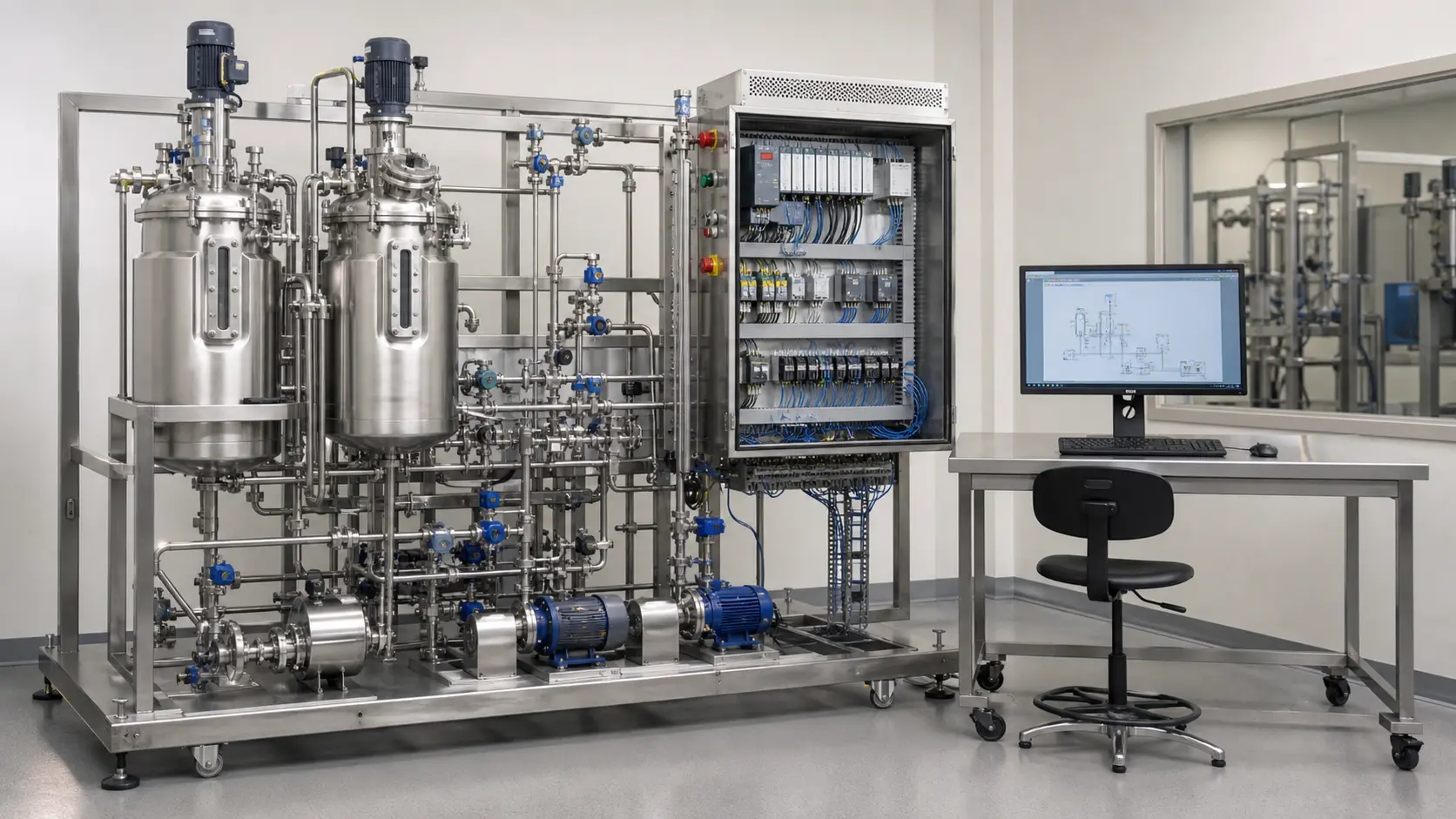
Intended use, product and recipe revision, equipment status, authorized actor, critical process parameters, record requirements and exception policy.
Authorized request through batch or sequence state, instruments, control actions, process response, alarms, timestamps and reviewable evidence.
One charge, mix, heat, hold or transfer operation completed with attributable conditions and reproducible results.
Late sensor, out-of-range value, unavailable equipment, interrupted step, manual intervention, restart, clock issue and record review.
A requirement, authorization, sequence, instrument, equipment, timestamp, exception, record or review mismatch.
The learning case kept separate from validated systems and compared with approved procedures and target qualification evidence.
It must connect process control to intended use, authorized actions, exceptions, timestamps and reviewable evidence while keeping validation claims outside the training model.
It can support learning records, but it does not qualify equipment, validate production software or establish regulated electronic-record compliance.