Pro
40 min

Gas Compressor ESD & Blowdown

oil-and-gascompressorESDSISblowdownpressureanti-surge

Ready to build this?

Sign up free — no credit card required. This scenario requires the Pro plan.

Sign up to play this scenario →

Already have an account? Log in

Gas Compressor ESD & Blowdown

Briefing

Commission a gas-compressor package with process permissives and an emergency-shutdown path. On a valid start, open suction and recycle, start the compressor, then transition from recycle to discharge only after the rotor reaches speed. The process model calculates rotor acceleration and discharge pressure. Fire-and-gas loss, safety-chain loss, lubrication/suction failure or high discharge pressure must latch ESD, isolate the compressor and open blowdown.

Objectives

  • Accept a start only with E-stop, fire-and-gas, lubrication, suction pressure and outlet permissives healthy
  • Start unloaded with suction and recycle open before placing the compressor on line
  • Close recycle and open discharge only after COMPRESSOR_AT_SPEED is proven
  • Latch ESD on a safety or high-pressure demand and remove all run outputs
  • Open blowdown during ESD and reject reset until the initiating condition is healthy

Hints

  • Treat ESD_BIT as retentive and independent of the normal RUN_BIT
  • The physics publishes speed and high-pressure feedback; OUTLET_BLOCKED drives the pressure upset
  • A stopped compressor should have suction, recycle and discharge isolated while blowdown follows the ESD latch

I/O Table

Inputs

START_PB

Compressor start request

BOOL · %I0.0

STOP_PB

Normal stop request

BOOL · %I0.1

RESET_PB

ESD reset request

BOOL · %I0.2

ESTOP_OK

Emergency shutdown chain healthy

BOOL · %I0.3

FIRE_GAS_OK

Fire-and-gas system healthy

BOOL · %I0.4

LUBE_PRESSURE_OK

Compressor lubrication pressure healthy

BOOL · %I0.5

SUCTION_PRESSURE_OK

Suction pressure permissive

BOOL · %I0.6

OUTLET_BLOCKED

Training upset: downstream outlet blocked

BOOL · %I0.7

COMPRESSOR_AT_SPEED

Physics: compressor rotor at speed

BOOL · %I1.0

HIGH_DISCHARGE_PRESSURE

Physics: high-high discharge pressure

BOOL · %I1.1

Outputs

SUCTION_VALVE

Compressor suction isolation valve

BOOL · %Q0.0

RECYCLE_VALVE

Recycle / unload valve

BOOL · %Q0.1

COMPRESSOR_MOTOR

Gas compressor driver

BOOL · %Q0.2

DISCHARGE_VALVE

Compressor discharge isolation valve

BOOL · %Q0.3

BLOWDOWN_VALVE

Emergency depressurisation valve

BOOL · %Q0.4

ESD_TRIP

Latched emergency shutdown indication

BOOL · %Q0.5

RUN_LAMP

Compressor on-line indication

BOOL · %Q0.6

Your program will be tested against:

All test cases run automatically when you submit. Assertions are hidden until you pass.

  1. #1Invalid permissive blocks startup

    A missing fire-and-gas healthy signal latches ESD and keeps the package isolated

  2. #2Compressor starts unloaded then goes on line

    Recycle remains open until speed is proven, then discharge opens

  3. #3Fire-and-gas demand triggers ESD and blowdown

    Loss of FIRE_GAS_OK isolates the running package and opens blowdown

  4. #4Blocked outlet creates a high-pressure ESD

    The physical pressure model reaches high-high pressure and trips the package

Ready to build this?

Sign up free — no credit card required. This scenario requires the Pro plan.

Sign up to play this scenario →

Already have an account? Log in

Runnable simulator field guide

Gas compressor ESD PLC scenario: test checklist

Direct answer

The learner can map each simulated initiating cause to the required stopped state, preserve first-out evidence and prove that reset does not restart unavailable equipment.

Written for process-control learners studying permissives, trips, first-out indication, shutdown outputs, depressurization boundaries and deliberate restart.
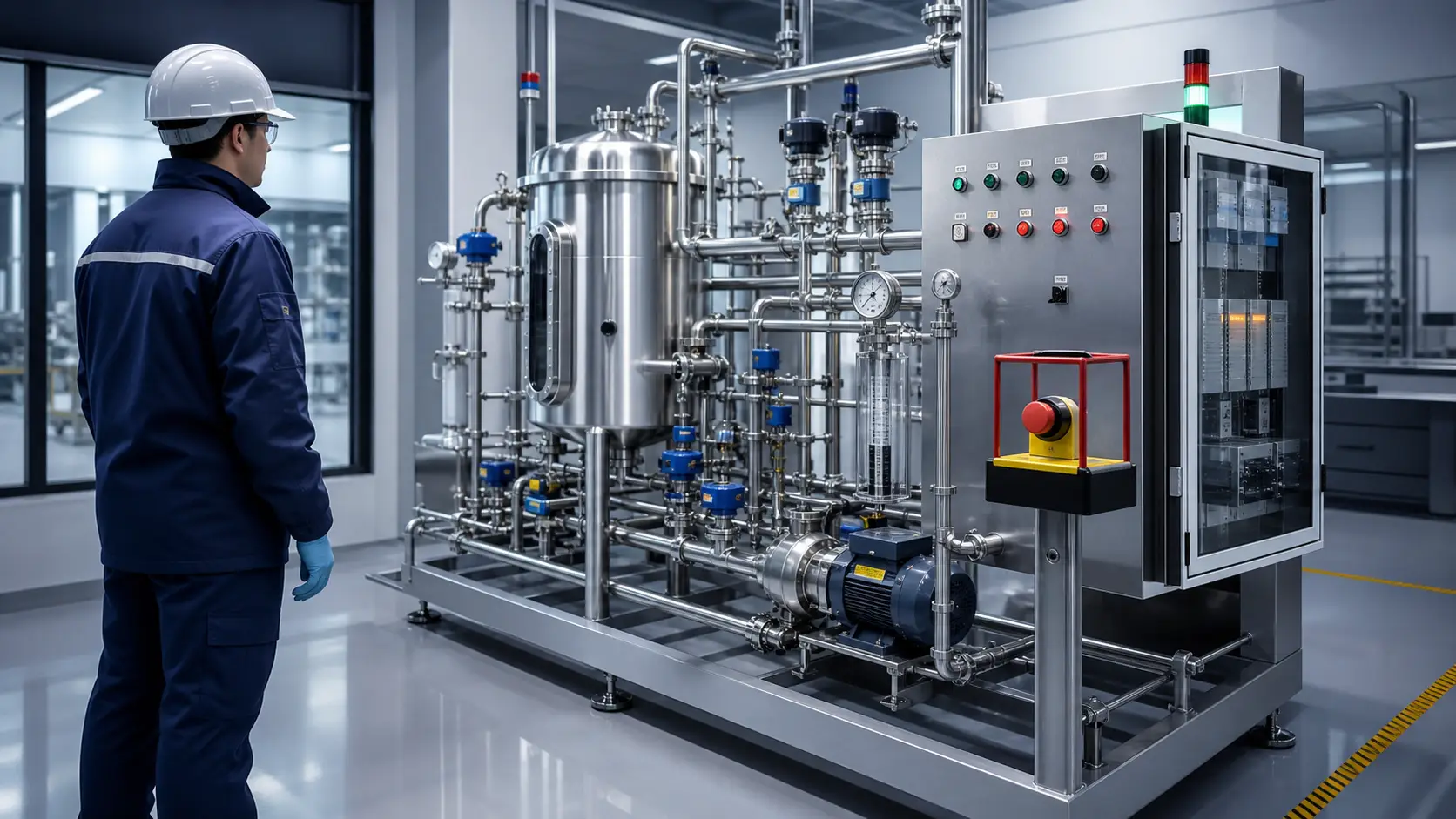
a guarded stainless process training skid used to validate clean-in-place and emergency-shutdown sequence states, instruments and feedback while studying gas-compressor emergency shutdown cause, effect and restart inhibition
System map / 02

NODE 01observable

Scenario setup

Process hazard, operating states, start permissives, trip causes, first-out, shutdown command, recycle or blowdown boundary, valve and motor feedback, alarm, reset and restart authorization.

NODE 02observable

I/O and state map

Pressure, temperature, vibration, gas or operator demand through shutdown logic to driver stop, valve commands, process response, feedback and retained event evidence.

NODE 03observable

Normal run

Every declared trip produces the intended stopped modeled state, records first-out cause and blocks restart until all conditions and deliberate actions exist.

NODE 04observable

Boundary run

Simultaneous trips, failed stop feedback, stuck valve, sensor bad quality, communication loss, reset held, cause returns, controller restart and power return.

NODE 05observable

Injected fault

An initiating-condition, input, vote, logic, output, final-element, process, feedback, event or restart mismatch.

NODE 06observable

Target check

The real cause-and-effect, protection layers and shutdown sequence engineered and validated by qualified teams on target equipment.

Answer surface / 07

What should a compressor ESD sequence do?

It should execute the approved cause-and-effect response, stop or isolate the required equipment, preserve first-out evidence and prevent restart until defined conditions are satisfied.

Why retain the first-out trip?

Later effects can trigger many alarms; first-out evidence helps distinguish the initiating condition from the shutdown consequences.