Technical reference and worked-example guide
PLC and automation components guide: field reference
Direct answer
The reader can classify a component by engineering role, identify its power and signal contracts and select the next detailed guide or runnable example.
Written for pLC beginners, technicians and instructors comparing controllers, I/O, sensors, relays, contactors, drives, instruments, networks and machine components.
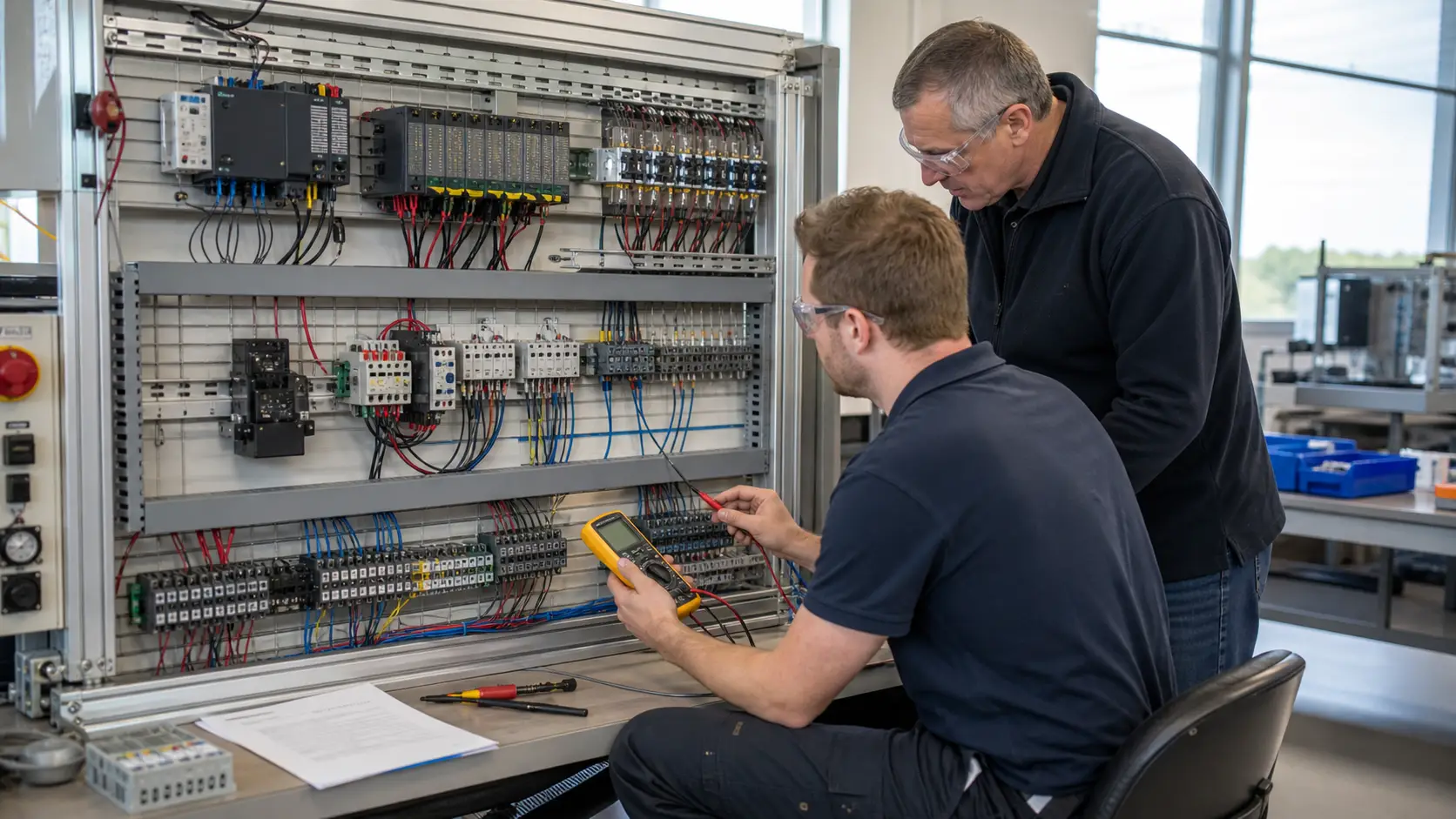
Definition
Process function, energy domain, signal type, supply, input and output contract, range, rating, environment, failure behavior, diagnostics and lifecycle support.
Signal path
Physical condition or command through sensing, control, interface, actuation and feedback components to an independently observed machine outcome.
Worked example
One representative component in each layer operates within its declared interface and produces traceable evidence.
Limits
Minimum and maximum rating, startup, loss of supply, wrong interface, replacement, intermittent connection, diagnostic state and safe failure.
Common mistake
A function, energy, signal, rating, interface, configuration, wiring, component, feedback or environment mismatch.
Verification
The candidate component checked with current data sheets, calculations, risk controls and representative tests.
What components are used in a PLC control system?
Typical systems include power supplies, controllers, I/O, sensors, instruments, relays, contactors, drives, actuators, operator interfaces, networks and protection.
How should I choose a PLC component?
Start from required function, signal and energy interfaces, ratings, environment, failure behavior, diagnostics, maintainability and current manufacturer evidence.