
Runnable simulator field guide
Analog-output wiring scenario: test checklist
Direct answer
The learner can distinguish requested value, limited command, raw output, loop signal, actuator response and independent process feedback.
Written for pLC and instrumentation learners connecting a commanded engineering value to an analog output and observable final element.
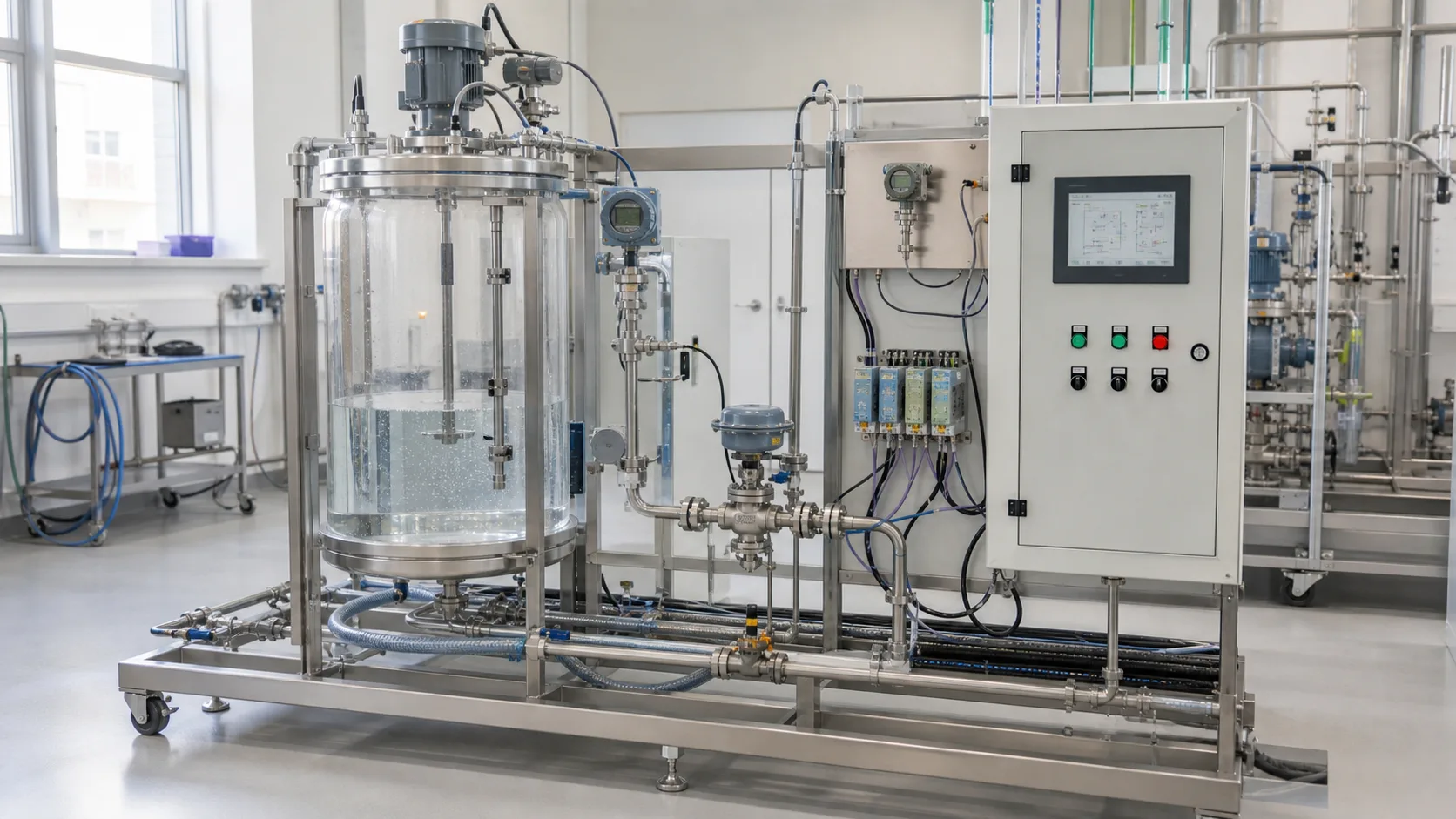
Scenario setup
Command source, engineering unit, min and max limits, output raw range, voltage or current type, sourcing arrangement, common, final element and feedback.
I/O and state map
Operator or logic request through limits, scaling, output image, module electronics, loop, actuator conversion and independent position or process response.
Normal run
Lower, midpoint and upper commands produce coherent raw, signal and measured response in the declared direction.
Boundary run
Open loop, short, wrong signal type, external-versus-loop power conflict, saturation, reversed action, manual override, restart and stale feedback.
Injected fault
A request, limit, scale, raw value, module, conductor, actuator, feedback or configuration mismatch.
Target check
The loop checked against current module and actuator manuals with approved isolation and calibration procedures.
How is a PLC analog output tested safely?
Use an approved isolated setup, command bounded known points and compare engineering request, raw output, measured signal and final-element feedback without defeating process safeguards.
Why can the output tag change while the valve does not move?
The command may be limited, scaled incorrectly, unmapped, electrically absent, overridden or rejected by the actuator; trace each boundary rather than assuming the tag is physical proof.