There is no single "Allen-Bradley certification." Rockwell Automation runs its own paid training courses (some with a certificate of completion or a credential), while the most widely recognized vendor-neutral exam — the CCST — is run by ISA, not Rockwell. To get hired as an Allen-Bradley programmer you usually combine a Rockwell course or an ISA credential with provable hands-on Studio 5000 / RSLogix skills. Knowing which path is which saves you both money and months.
This guide is independent prep and is not affiliated with or endorsed by Rockwell Automation or ISA. Treat every code, price and pass mark below as illustrative — always confirm against current Rockwell and ISA listings before you book. For the general landscape see our PLC certification guide; for the deep-dive on one specific exam, see how to pass the Rockwell CCST exam.
What "Allen-Bradley certification" actually means
Allen-Bradley is the hardware brand; Rockwell Automation is the company behind it and behind the Studio 5000 and legacy RSLogix software. When people search for "Allen-Bradley certification" they are usually after one of three different things, and they get conflated constantly:
- A Rockwell training course — instructor-led or on-demand classes that teach a specific topic (e.g. ControlLogix fundamentals) and may award a certificate of completion.
- A vendor-neutral credential — most often ISA's Certified Control Systems Technician (CCST), which is respected industry-wide but is not a Rockwell product.
- Provable skills — a portfolio of working Studio 5000 / RSLogix programs that an employer can actually see, with or without a piece of paper.
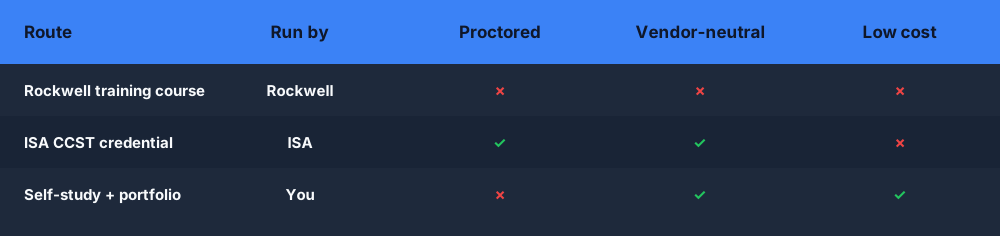
The honest takeaway: a certificate opens the door for an interview, but the hands-on skill is what gets you hired and keeps you employed. Plan for both.
The Rockwell training route
Rockwell sells structured training — classroom, virtual classroom and on-demand — usually organized around a product family such as ControlLogix/CompactLogix with Studio 5000, or the older RSLogix 500 / RSLogix 5000 world. Courses tend to ladder from fundamentals (navigating the software, basic instructions) up to advanced topics (motion, networking, troubleshooting).
A few realities to budget for:
- Cost is the main barrier. Instructor-led Rockwell courses are priced for employers, not hobbyists, and can run into thousands per course before travel. On-demand and subscription options are cheaper but still a real spend. Check current Rockwell listings for today's pricing and what each tier includes.
- A "certificate of completion" is not the same as a proctored credential. Read carefully whether a course awards a recognized credential or simply confirms you attended.
- Software access matters. Some courses bundle temporary software access; otherwise you need your own way to practice (more on that below).
Where ISA's CCST fits in
The CCST is the credential most controls techs actually put on a CV. Important distinctions:
- It is administered by ISA (the International Society of Automation), not Rockwell. It is vendor-neutral, so it covers control concepts across brands rather than Allen-Bradley specifically.
- It is offered in levels (commonly described as I, II and III) that map roughly to years of relevant experience, and there are usually eligibility requirements you must meet before you can sit it.
- It is a proctored exam, which gives it more weight with employers than a course completion certificate.
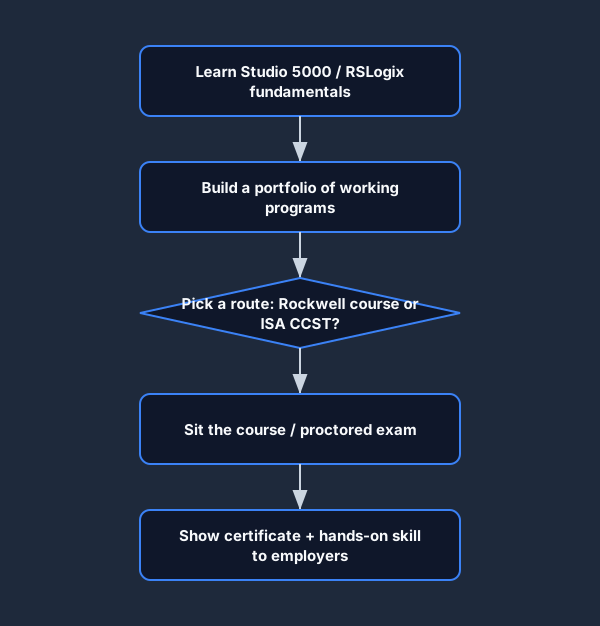
If your goal is a portable credential that signals competence across vendors, CCST is the strong default. If your goal is depth in one product family, a Rockwell course is the better fit. Many people end up doing both over a career. Confirm levels, eligibility and fees against current ISA listings — they change.
Rockwell vs CCST vs self-study
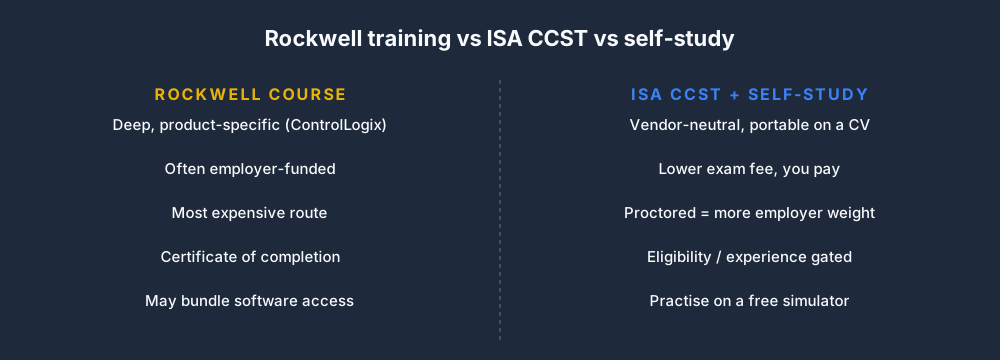
There is no universally "right" choice — it depends on who is paying and what you are optimizing for:
- Employer paying, you need product depth? Take the Rockwell course your shop runs.
- You are paying, you want a portable line on your CV? Aim at CCST and build a project portfolio alongside it.
- Pre-job, limited budget, building skills first? Self-study the software, then add a credential once you can demonstrate the work.
Self-study is not a consolation prize. Most hiring managers care far more that you can open Studio 5000 and build, simulate and troubleshoot a working program than which classroom you sat in.
How much does Allen-Bradley certification cost?
There is no single number, and anyone quoting an exact figure is guessing. Roughly, the buckets are:
- Rockwell instructor-led courses — the most expensive, often employer-funded, with on-demand/subscription tiers as cheaper alternatives.
- ISA CCST exam fees — a per-exam fee that is far smaller than a full Rockwell course, plus any prep materials you buy. Eligibility (experience/education) is the bigger gate than the fee.
- Self-study — the cheapest path; your main costs are time and a way to practice on the actual software.
Always price these against current Rockwell and ISA listings before committing — vendor pricing and bundles shift year to year, and regional pricing varies.
A realistic study plan
You do not need to do this in one heroic month. Spread it out and practice every step on real software.
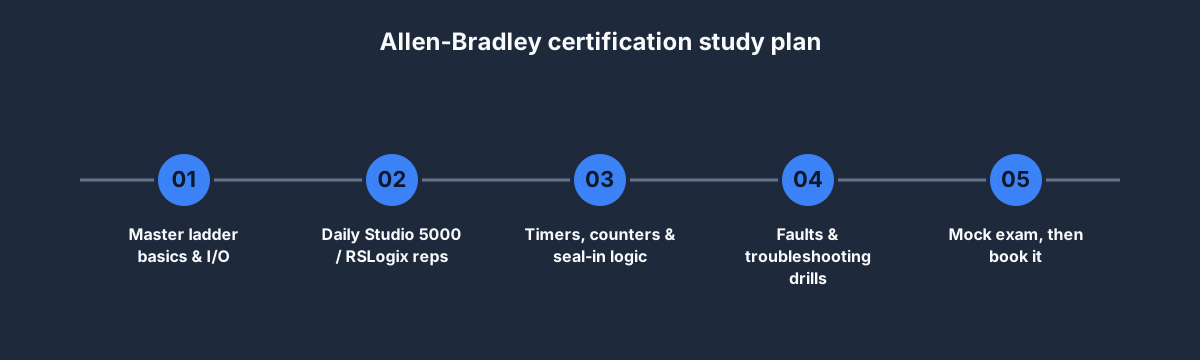
The single biggest accelerator is daily reps in the software. Reading about a TON timer is not the same as wiring one, forcing an input and watching it behave on a scan.
Studio 5000 / RSLogix skills to master
Whatever credential you chase, employers test the same core competencies. Be able to do all of these without notes:
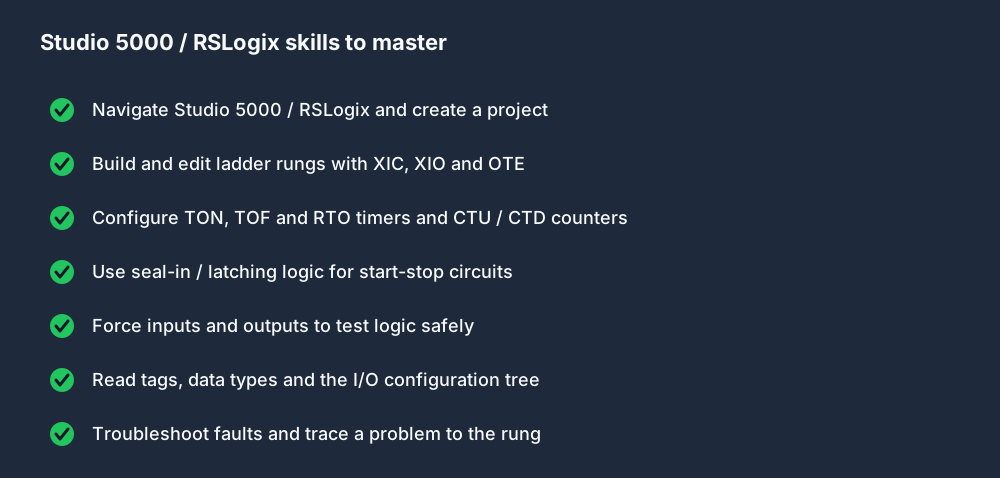
If you can do every item on that list confidently, you will pass most practical assessments and interview screens — regardless of which certificate is on the wall.
Prep resources (and how to practice hands-on)
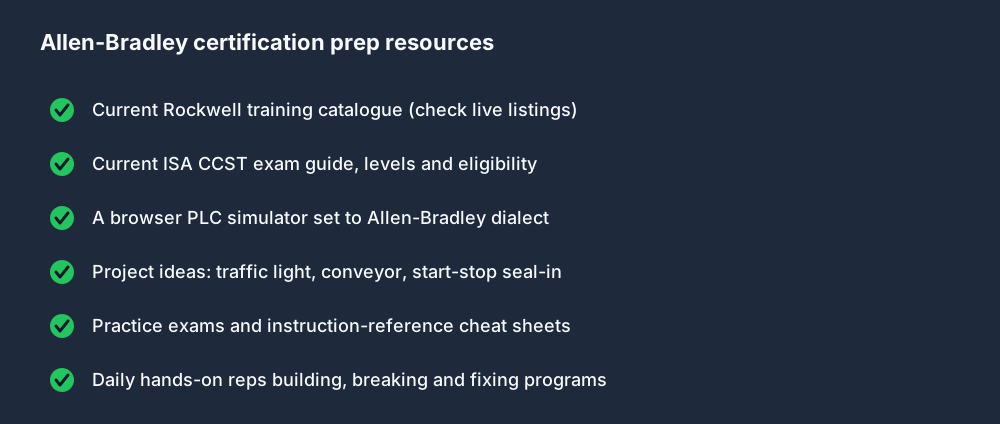
The hardest part of self-study used to be access to the software. You can sidestep that: practice ladder logic in your browser with a free PLC simulator that lets you build, run and force I/O, and switch the RSLogix-style simulator into Allen-Bradley dialect so the instruction names match what you will see on the exam and the job. Build, break and fix small programs until the patterns are automatic — then go book your exam.
FAQ
Is there an official Allen-Bradley certification? Not as a single exam. Rockwell Automation offers paid training courses (some awarding a certificate of completion or credential), while the widely recognized vendor-neutral exam is ISA's CCST — which is not a Rockwell product. Confirm specifics on the current Rockwell and ISA listings.
Is the CCST a Rockwell certification? No. The CCST is administered by ISA (the International Society of Automation) and is vendor-neutral. It is popular among controls techs who work with Allen-Bradley hardware but it is not run by Rockwell.
How much does Allen-Bradley / Rockwell certification cost? It varies widely. Rockwell instructor-led courses are the most expensive (often employer-funded), ISA CCST exam fees are much smaller per attempt, and self-study is the cheapest. Always check current Rockwell and ISA listings for exact pricing.
Can I get certified without paying for a Rockwell course? Yes. Many people self-study the software, build a portfolio of working Studio 5000 / RSLogix programs, and pursue the vendor-neutral CCST rather than a Rockwell course. Demonstrable skill matters more to most employers than which classroom you attended.
What software do I need to practice Allen-Bradley programming? Studio 5000 (or legacy RSLogix) is the real tool, but it is not always accessible for self-learners. A browser-based PLC simulator set to Allen-Bradley dialect lets you practice the same instructions and logic for free before you book an exam.