Case 01
predict → observe → prove
Prove controller context
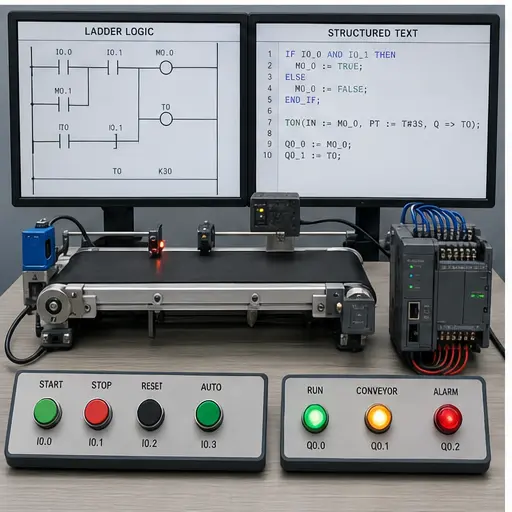
Engineering context. Record exact CPU, modules, software generation and firmware before following an example. Begin with a written normal condition and identify which request, state, physical result or communication value will provide independent confirmation. Do not begin by changing the configuration; the initial state is part of the evidence and should remain reproducible.
Controlled setup. Use the “Define the target” stage of the workflow: identify controller, modules, network and software. The acceptance record should show this result: the example has a bounded context. Record initial conditions, the exact stimulus and the observation point so another learner can repeat the case without relying on your memory.
Fault challenge. Introduce or analyse “Input missing” as one bounded deviation. Inspect wiring, module/channel, device mapping and monitored tag The working interpretation is that the failing boundary may precede logic. The next proving action is to prove each layer. Change only one condition before observing the result, and preserve timestamps or measurements where timing matters.
Review and recovery. The most common trap here is following a generic screenshot. After restoring the cause, repeat the normal case and at least one stop, timeout, disconnect or restart boundary relevant to this topic. Remove temporary forces and bypasses, return the model to a known state and retain the evidence that both operation and recovery are deliberate.
Explain it aloud: Is this official KEYENCE training? A defensible short answer is: No. It is independent educational material and links to transferable browser practice.
Case 02
predict → observe → prove
Prove i/o ownership
Engineering context. Map physical points, internal state, data and diagnostic values with meaningful symbols. Begin with a written normal condition and identify which request, state, physical result or communication value will provide independent confirmation. Do not begin by changing the configuration; the initial state is part of the evidence and should remain reproducible.
Controlled setup. Use the “Map one I/O path” stage of the workflow: trace sensor to input, logic, output and actuator feedback. The acceptance record should show this result: every point has one engineering role. Record initial conditions, the exact stimulus and the observation point so another learner can repeat the case without relying on your memory.
Fault challenge. Introduce or analyse “Output commanded, no action” as one bounded deviation. Inspect module state, interface, protection, actuator and feedback The working interpretation is that controller intent does not prove motion. The next proving action is to continue through hardware. Change only one condition before observing the result, and preserve timestamps or measurements where timing matters.
Review and recovery. The most common trap here is using addresses without descriptions. After restoring the cause, repeat the normal case and at least one stop, timeout, disconnect or restart boundary relevant to this topic. Remove temporary forces and bypasses, return the model to a known state and retain the evidence that both operation and recovery are deliberate.
Explain it aloud: Which controller does the simulator emulate? A defensible short answer is: It does not claim KV CPU emulation. Confirm every platform detail in official documentation.
Case 03
predict → observe → prove
Prove program execution
Engineering context. Apply transferable scan and state reasoning while checking product-specific task behavior. Begin with a written normal condition and identify which request, state, physical result or communication value will provide independent confirmation. Do not begin by changing the configuration; the initial state is part of the evidence and should remain reproducible.
Controlled setup. Use the “Build a basic routine” stage of the workflow: implement start, stop, permissive and feedback behavior. The acceptance record should show this result: normal and stopping cases are testable. Record initial conditions, the exact stimulus and the observation point so another learner can repeat the case without relying on your memory.
Fault challenge. Introduce or analyse “Timer or counter differs” as one bounded deviation. Inspect instruction definition, time base, edge and reset behavior The working interpretation is that transferable names can hide platform differences. The next proving action is to use exact instruction help. Change only one condition before observing the result, and preserve timestamps or measurements where timing matters.
Review and recovery. The most common trap here is copying vendor syntax without behavior. After restoring the cause, repeat the normal case and at least one stop, timeout, disconnect or restart boundary relevant to this topic. Remove temporary forces and bypasses, return the model to a known state and retain the evidence that both operation and recovery are deliberate.
Explain it aloud: Can I import projects? A defensible short answer is: No project compatibility is promised. Recreate and test examples in the official environment.
Case 04
predict → observe → prove
Prove online monitoring
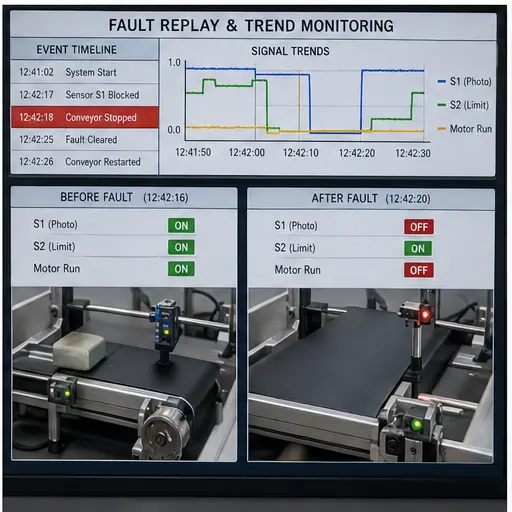
Engineering context. Use observation to compare request, logic result, output and feedback; record forces and clear them. Begin with a written normal condition and identify which request, state, physical result or communication value will provide independent confirmation. Do not begin by changing the configuration; the initial state is part of the evidence and should remain reproducible.
Controlled setup. Use the “Monitor state” stage of the workflow: observe tags during controlled transitions. The acceptance record should show this result: predicted and actual state agree. Record initial conditions, the exact stimulus and the observation point so another learner can repeat the case without relying on your memory.
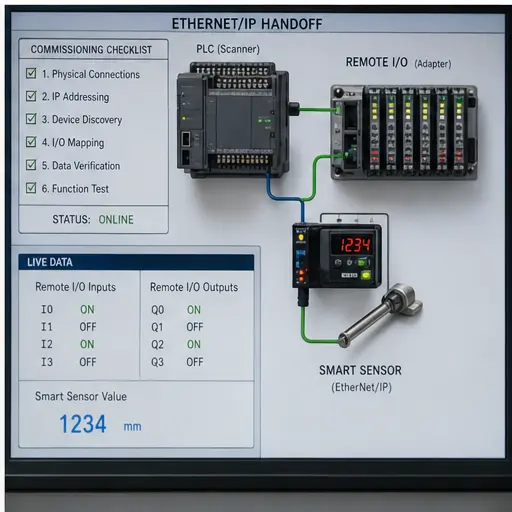
Fault challenge. Introduce or analyse “Communication fault” as one bounded deviation. Inspect topology, identity, settings, diagnostics and peer state The working interpretation is that a network issue should be isolated by layer. The next proving action is to preserve status codes. Change only one condition before observing the result, and preserve timestamps or measurements where timing matters.
Review and recovery. The most common trap here is leaving forced values active. After restoring the cause, repeat the normal case and at least one stop, timeout, disconnect or restart boundary relevant to this topic. Remove temporary forces and bypasses, return the model to a known state and retain the evidence that both operation and recovery are deliberate.
Explain it aloud: What should I learn first? A defensible short answer is: Start with I/O mapping, scan reasoning, start-stop logic, timers, counters and monitoring.
Case 05
predict → observe → prove
Prove diagnostics
Engineering context. Preserve controller and module status before reset or project changes. Begin with a written normal condition and identify which request, state, physical result or communication value will provide independent confirmation. Do not begin by changing the configuration; the initial state is part of the evidence and should remain reproducible.
Controlled setup. Use the “Create a fault case” stage of the workflow: remove one permissive or feedback condition. The acceptance record should show this result: the diagnostic path identifies the boundary. Record initial conditions, the exact stimulus and the observation point so another learner can repeat the case without relying on your memory.
Fault challenge. Introduce or analyse “Restart surprises” as one bounded deviation. Inspect retained data, initialization and physical state The working interpretation is that software and machine state may disagree. The next proving action is to test startup explicitly. Change only one condition before observing the result, and preserve timestamps or measurements where timing matters.
Review and recovery. The most common trap here is resetting without evidence. After restoring the cause, repeat the normal case and at least one stop, timeout, disconnect or restart boundary relevant to this topic. Remove temporary forces and bypasses, return the model to a known state and retain the evidence that both operation and recovery are deliberate.
Explain it aloud: Are addresses identical across models? A defensible short answer is: Do not assume so; controller and module families can differ.
Case 06
predict → observe → prove
Prove change control
Engineering context. Back up, compare, test and document every modification in the approved environment. Begin with a written normal condition and identify which request, state, physical result or communication value will provide independent confirmation. Do not begin by changing the configuration; the initial state is part of the evidence and should remain reproducible.
Controlled setup. Use the “Verify on target” stage of the workflow: recreate, compile and test in official software/hardware. The acceptance record should show this result: platform-specific truth is retained. Record initial conditions, the exact stimulus and the observation point so another learner can repeat the case without relying on your memory.
Fault challenge. Introduce or analyse “Change caused regression” as one bounded deviation. Inspect backup diff, affected routines, I/O and acceptance cases The working interpretation is that a local edit changed another behavior. The next proving action is to run the regression set. Change only one condition before observing the result, and preserve timestamps or measurements where timing matters.
Review and recovery. The most common trap here is deploying browser code directly. After restoring the cause, repeat the normal case and at least one stop, timeout, disconnect or restart boundary relevant to this topic. Remove temporary forces and bypasses, return the model to a known state and retain the evidence that both operation and recovery are deliberate.
Explain it aloud: Can online practice help without hardware? A defensible short answer is: Yes for logic and diagnostic reasoning, followed by target-tool and hardware validation.