Case 01
predict → observe → prove
Prove role ownership
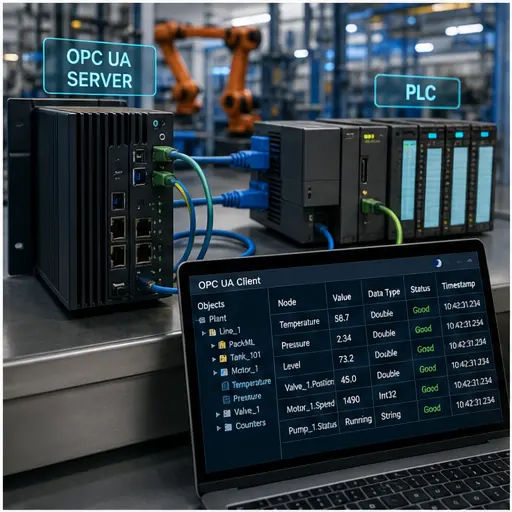
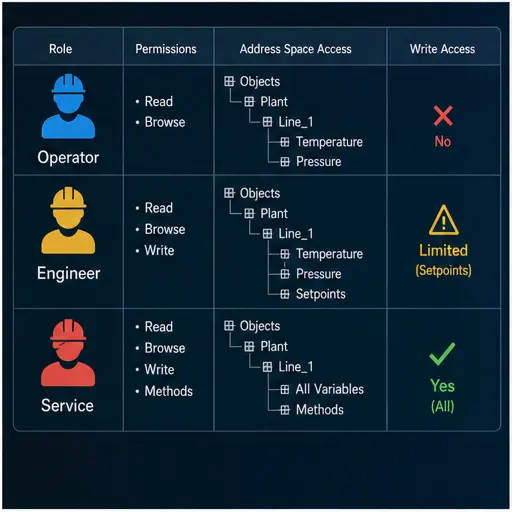
Engineering context. Name each endpoint and which side initiates, serves, produces or consumes data within application identity, endpoint, security policy, certificate trust, session, browse path, NodeId, attribute and subscription. Begin with a written normal condition and identify which request, state, physical result or communication value will provide independent confirmation. Do not begin by changing the configuration; the initial state is part of the evidence and should remain reproducible.
Controlled setup. Use the “Draw the topology” stage of the workflow: name endpoints, switches, media, addressing and ownership. The acceptance record should show this result: the intended path is unambiguous. Record initial conditions, the exact stimulus and the observation point so another learner can repeat the case without relying on your memory.
Fault challenge. Introduce or analyse “No physical link” as one bounded deviation. Inspect power, media, connector, switch and port state The working interpretation is that the failure is below protocol configuration. The next proving action is to restore link first. Change only one condition before observing the result, and preserve timestamps or measurements where timing matters.
Review and recovery. The most common trap here is beginning with random software settings. After restoring the cause, repeat the normal case and at least one stop, timeout, disconnect or restart boundary relevant to this topic. Remove temporary forces and bypasses, return the model to a known state and retain the evidence that both operation and recovery are deliberate.
Explain it aloud: What should I learn first? A defensible short answer is: Start with roles and the exact data contract: application identity, endpoint, security policy, certificate trust, session, browse path, NodeId, attribute and subscription.
Case 02
predict → observe → prove
Prove identity and path
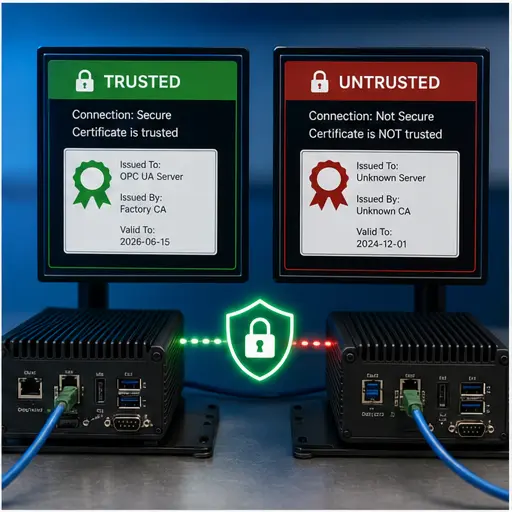
Engineering context. Prove the exact endpoint and device identity before debugging the payload. Begin with a written normal condition and identify which request, state, physical result or communication value will provide independent confirmation. Do not begin by changing the configuration; the initial state is part of the evidence and should remain reproducible.
Controlled setup. Use the “Verify the physical layer” stage of the workflow: check power, link, media, topology and port state. The acceptance record should show this result: basic connectivity is proven. Record initial conditions, the exact stimulus and the observation point so another learner can repeat the case without relying on your memory.
Fault challenge. Introduce or analyse “Reachable but no session/connection” as one bounded deviation. Inspect endpoint role, identity, security or connection parameters The working interpretation is that network path works while protocol establishment fails. The next proving action is to read exact status and logs. Change only one condition before observing the result, and preserve timestamps or measurements where timing matters.
Review and recovery. The most common trap here is treating a link light as application success. After restoring the cause, repeat the normal case and at least one stop, timeout, disconnect or restart boundary relevant to this topic. Remove temporary forces and bypasses, return the model to a known state and retain the evidence that both operation and recovery are deliberate.
Explain it aloud: Does a successful connection prove correct data? A defensible short answer is: No. Verify direction, type, scale, units, quality and physical meaning.
Case 03
predict → observe → prove
Prove data model
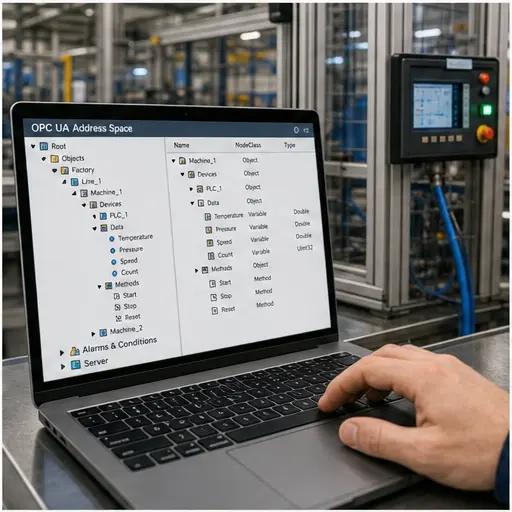
Engineering context. Map objects, variables, methods, events, timestamps and status quality into typed engineering tags with direction, units and ownership. Begin with a written normal condition and identify which request, state, physical result or communication value will provide independent confirmation. Do not begin by changing the configuration; the initial state is part of the evidence and should remain reproducible.
Controlled setup. Use the “Verify identity” stage of the workflow: confirm address, name, device/revision and endpoint role. The acceptance record should show this result: the configuration targets the intended device. Record initial conditions, the exact stimulus and the observation point so another learner can repeat the case without relying on your memory.
Fault challenge. Introduce or analyse “Protocol exception or reject” as one bounded deviation. Inspect function/service, object/address and application identity, endpoint, security policy, certificate trust, session, browse path, NodeId, attribute and subscription The working interpretation is that the peer understood enough to reject a request. The next proving action is to use the returned diagnostic. Change only one condition before observing the result, and preserve timestamps or measurements where timing matters.
Review and recovery. The most common trap here is connecting to the wrong but reachable endpoint. After restoring the cause, repeat the normal case and at least one stop, timeout, disconnect or restart boundary relevant to this topic. Remove temporary forces and bypasses, return the model to a known state and retain the evidence that both operation and recovery are deliberate.
Explain it aloud: How should communication faults be diagnosed? A defensible short answer is: Move layer by layer from physical link and identity through protocol status, mapping and application behavior.
Case 04
predict → observe → prove
Prove update behavior
Engineering context. Document cyclic, polled, subscribed or event behavior plus timing and timeout. Begin with a written normal condition and identify which request, state, physical result or communication value will provide independent confirmation. Do not begin by changing the configuration; the initial state is part of the evidence and should remain reproducible.
Controlled setup. Use the “Match the contract” stage of the workflow: compare application identity, endpoint, security policy, certificate trust, session, browse path, NodeId, attribute and subscription at both ends. The acceptance record should show this result: direction, size and identifiers agree. Record initial conditions, the exact stimulus and the observation point so another learner can repeat the case without relying on your memory.
Fault challenge. Introduce or analyse “Data changes but is wrong” as one bounded deviation. Inspect type, direction, byte/word mapping, scale and objects, variables, methods, events, timestamps and status quality The working interpretation is that transport succeeds while interpretation fails. The next proving action is to compare a known pattern. Change only one condition before observing the result, and preserve timestamps or measurements where timing matters.
Review and recovery. The most common trap here is changing multiple fields simultaneously. After restoring the cause, repeat the normal case and at least one stop, timeout, disconnect or restart boundary relevant to this topic. Remove temporary forces and bypasses, return the model to a known state and retain the evidence that both operation and recovery are deliberate.
Explain it aloud: What is stale data? A defensible short answer is: It is a previously valid value that is no longer being updated within the required freshness contract.
Case 05
predict → observe → prove
Prove quality and stale state
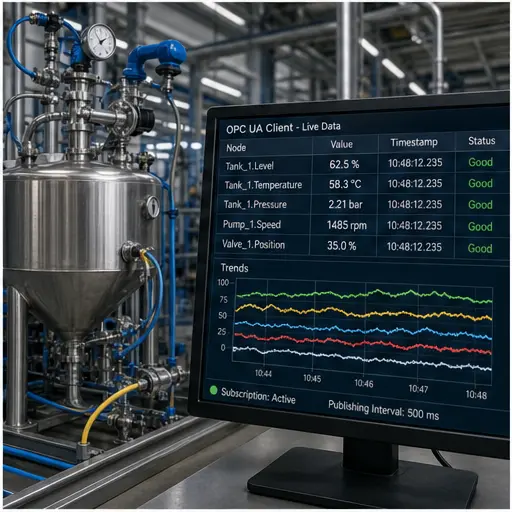
Engineering context. A value needs freshness and communication state; last-known data must not masquerade as current truth. Begin with a written normal condition and identify which request, state, physical result or communication value will provide independent confirmation. Do not begin by changing the configuration; the initial state is part of the evidence and should remain reproducible.
Controlled setup. Use the “Prove engineering data” stage of the workflow: operate one real or simulated input and map objects, variables, methods, events, timestamps and status quality. The acceptance record should show this result: the expected tag changes with correct type and units. Record initial conditions, the exact stimulus and the observation point so another learner can repeat the case without relying on your memory.
Fault challenge. Introduce or analyse “Intermittent timeout” as one bounded deviation. Inspect load, update rate, topology, errors and resource limits The working interpretation is that timing margin or physical quality may be unstable. The next proving action is to capture counters and timestamps. Change only one condition before observing the result, and preserve timestamps or measurements where timing matters.
Review and recovery. The most common trap here is accepting a successful status with wrong data. After restoring the cause, repeat the normal case and at least one stop, timeout, disconnect or restart boundary relevant to this topic. Remove temporary forces and bypasses, return the model to a known state and retain the evidence that both operation and recovery are deliberate.
Explain it aloud: Should I increase timeouts first? A defensible short answer is: No. Preserve evidence and identify physical, load, configuration or processing causes before masking them.
Case 06
predict → observe → prove
Prove recovery
Engineering context. Test disconnect, restart, reconnection, resubscription or connection establishment and application safe response. Begin with a written normal condition and identify which request, state, physical result or communication value will provide independent confirmation. Do not begin by changing the configuration; the initial state is part of the evidence and should remain reproducible.
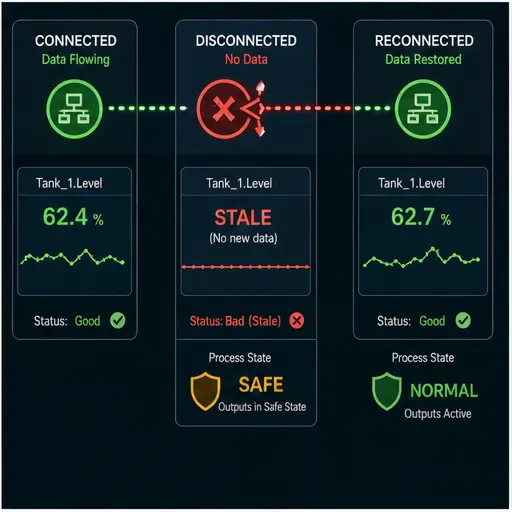
Controlled setup. Use the “Test failure and return” stage of the workflow: disconnect deliberately under an approved test and restore. The acceptance record should show this result: timeout, safe state, stale indication and recovery pass. Record initial conditions, the exact stimulus and the observation point so another learner can repeat the case without relying on your memory.
Fault challenge. Introduce or analyse “Reconnect leaves stale state” as one bounded deviation. Inspect timeout policy, quality, resubscription/reconnection and application state The working interpretation is that communication returned without restoring the data contract. The next proving action is to test complete recovery sequence. Change only one condition before observing the result, and preserve timestamps or measurements where timing matters.
Review and recovery. The most common trap here is testing only startup success. After restoring the cause, repeat the normal case and at least one stop, timeout, disconnect or restart boundary relevant to this topic. Remove temporary forces and bypasses, return the model to a known state and retain the evidence that both operation and recovery are deliberate.
Explain it aloud: Can this browser guide test conformance? A defensible short answer is: No. It teaches concepts and diagnosis; formal conformance needs approved specifications and test programs.