
Runnable simulator field guide
Pneumatic-press PLC scenario: test checklist
Direct answer
The learner can define every motion permission and feedback transition, detect failure to reach position and recover without uncontrolled repeat movement.
Written for automation learners programming a guarded low-energy press model with clamp or extend, return, position proof and cycle state.
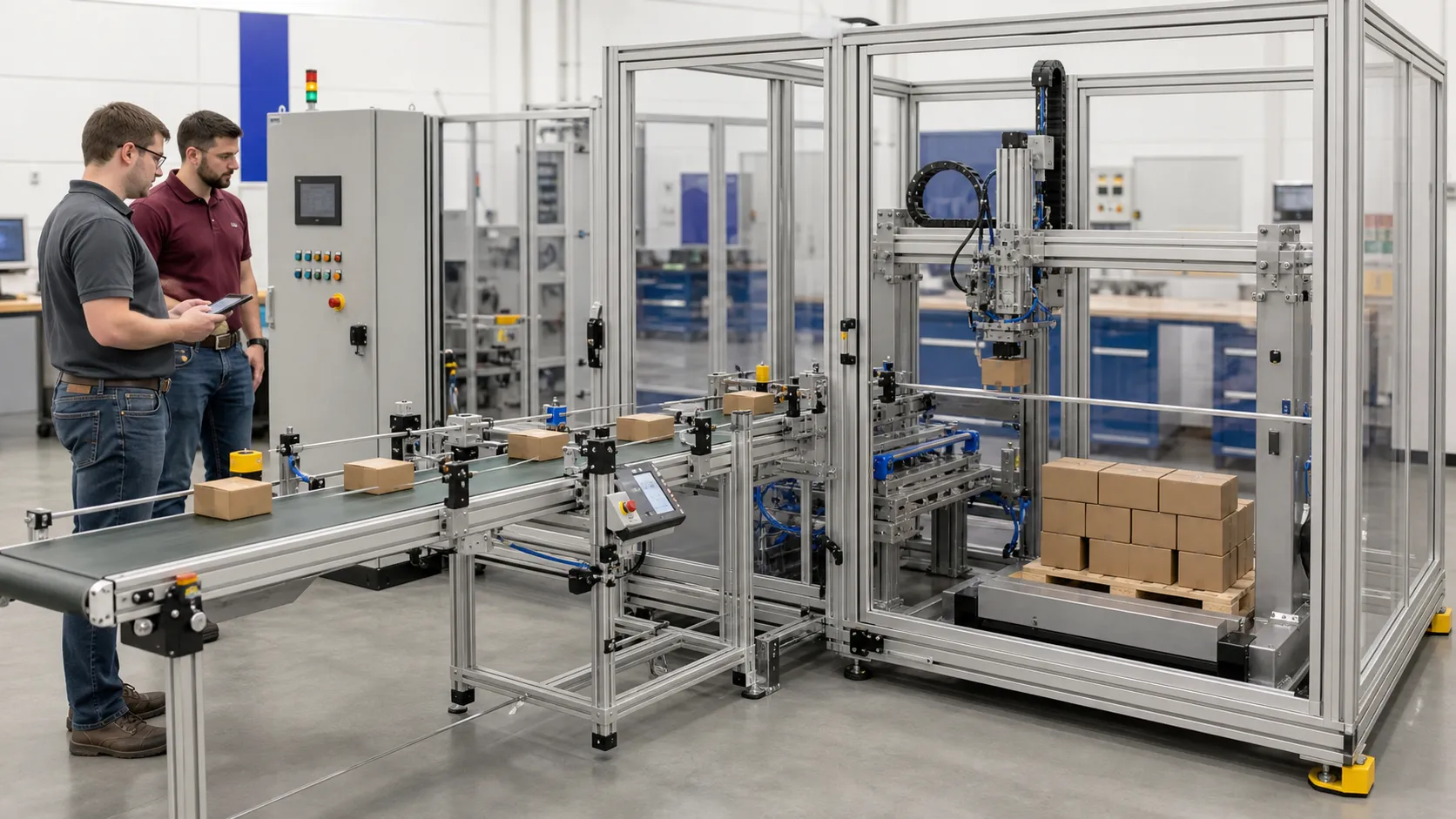
Scenario setup
Hazard boundary, safe training mode, start request, guard or protective condition, part present, pressure available, valve normal state, extend and retract commands, end sensors, timeout, stop and restart policy.
I/O and state map
Cycle demand through permissives and explicit state to valve output, cylinder motion, end-position feedback, dwell or process result, return and completed-cycle evidence.
Normal run
One deliberate request produces exactly one extend-and-return cycle with every transition proved and stop behavior defined.
Boundary run
Missing part, guard demand, low pressure, valve stuck, extend timeout, retract timeout, both end sensors, lost feedback, interrupted cycle and power return.
Injected fault
A permissive, state, command, valve, pressure, cylinder, sensor, timeout, stop or restart mismatch.
Target check
The real machine engineered and validated by qualified people for guarding, energy control, pneumatics and functional safety.
What should a pneumatic press PLC sequence include?
Include explicit permissions, one-cycle state, valve commands, independent end-position feedback, timeouts, stop response and a deliberate recovery path.
Why is an output command not proof that a cylinder moved?
The valve, air supply, flow controls, cylinder, load or feedback can fail after the PLC output changes.