Technical reference and worked-example guide
PLC motor control: field reference
Direct answer
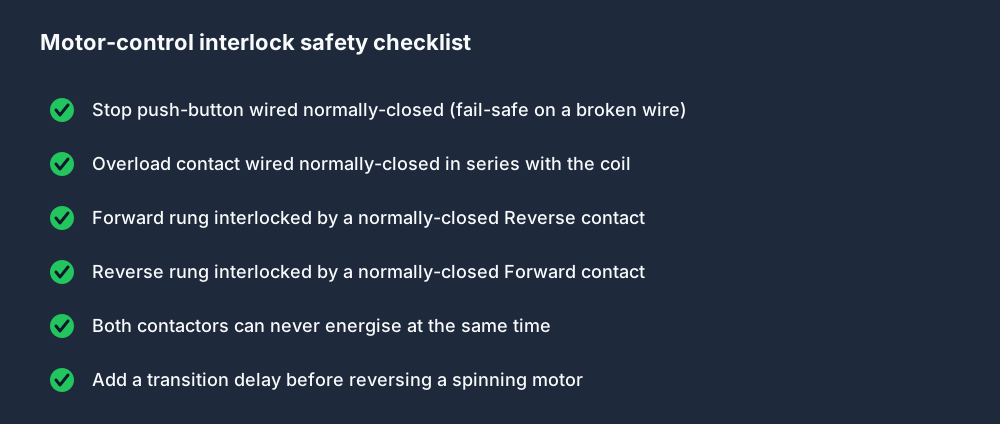
The learner can build and test stop-priority logic, permissives, interlocks, run proof, fault response and defined restart behavior.
Written for pLC and electrical learners implementing motor requests while separating software state, output interface, starter or drive, motor and process proof.

Definition
Motor and load, operating modes, commands, permissives, interlocks, outputs, starter or drive, feedback, faults, stop category and restart policy.
Signal path
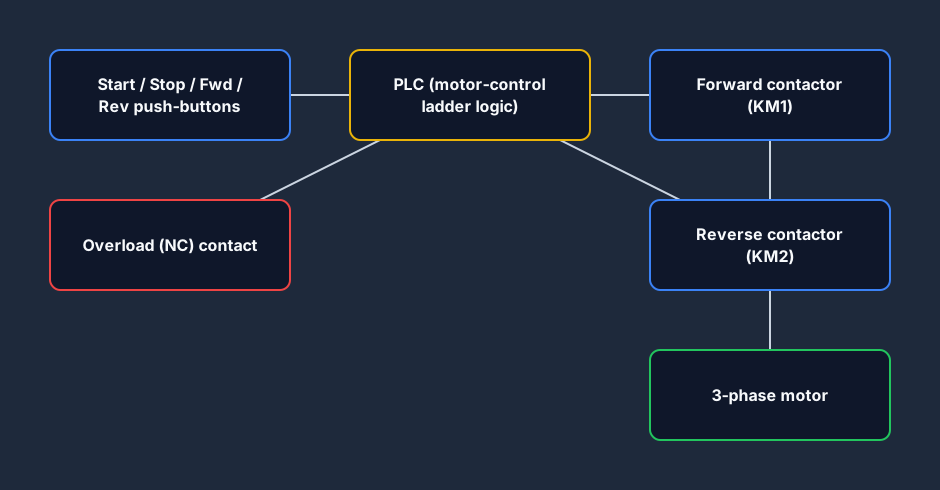
Operator or sequence request through PLC arbitration and output to power device, motor response and independent running or process feedback.
Worked example
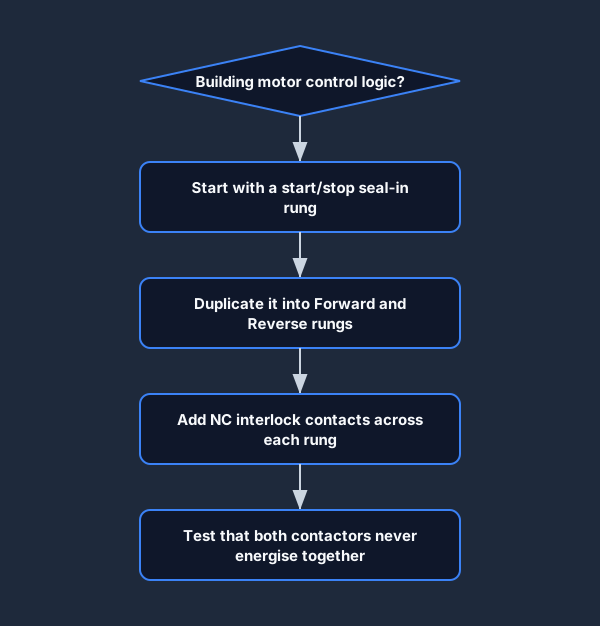
Local or automatic start, proven run, controlled stop and repeated restart from known states.
Limits
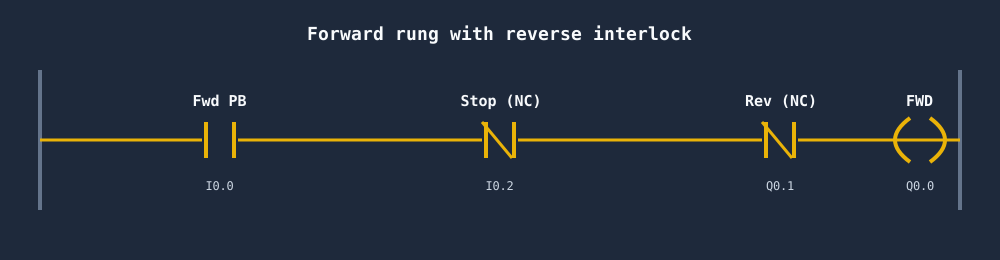
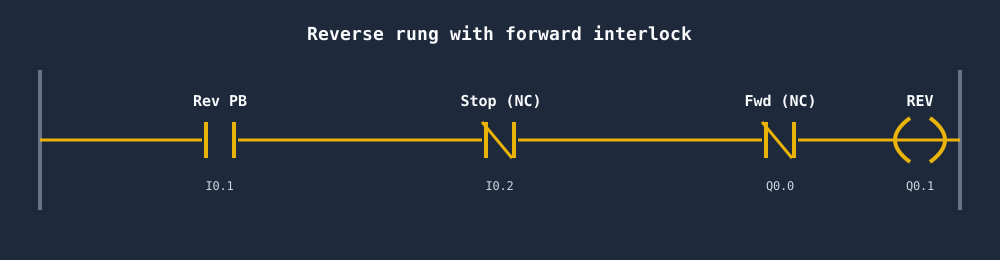
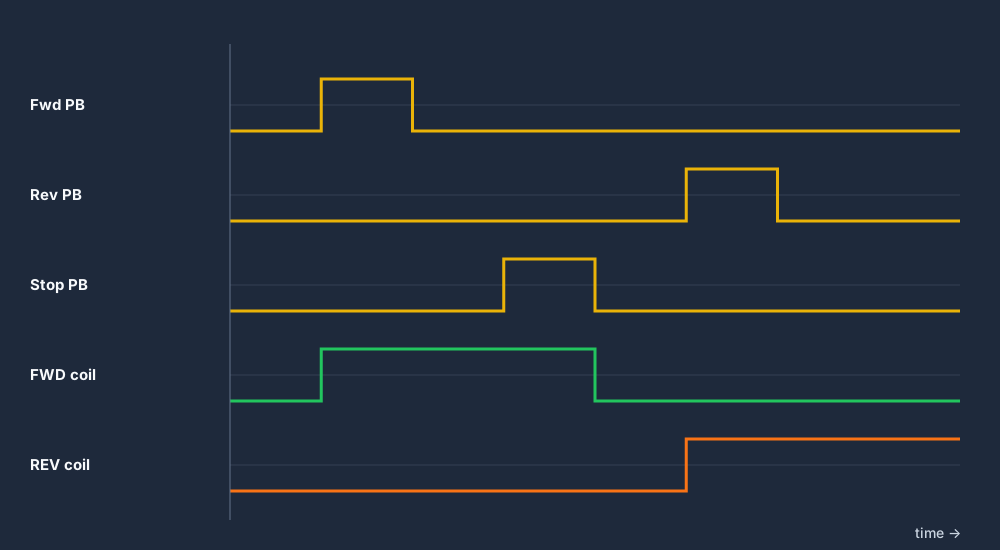
Simultaneous forward and reverse, welded output, failed feedback, overload, lost permissive, stop during transition and power return.
Common mistake
A mode, command, permissive, logic, output, starter or drive, motor, feedback or load defect.
Verification
The control reviewed against risk requirements and validated on the safeguarded target machine.
How do you program motor start and stop in a PLC?
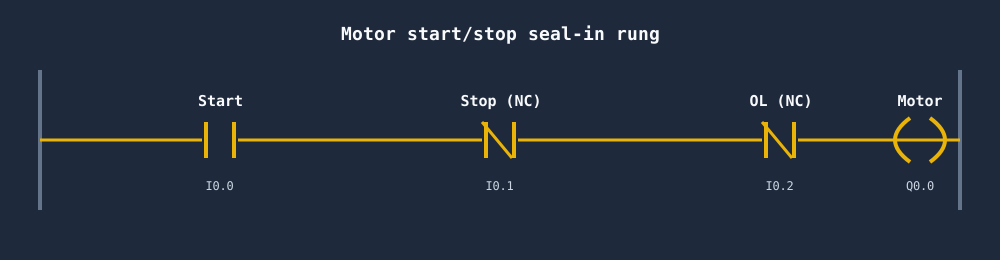
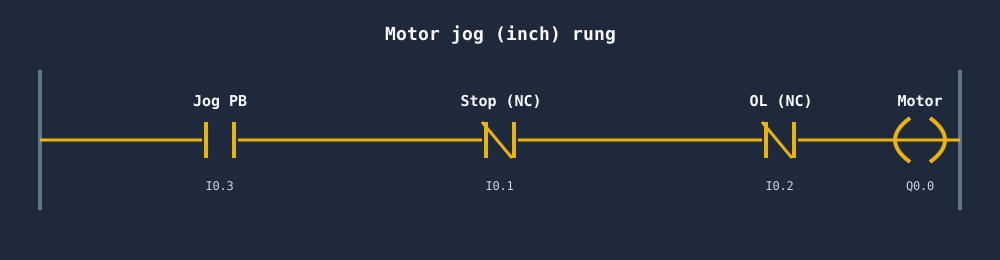
Define stop priority, start request, seal-in or state ownership, permissives, interlocks, output command, run feedback, trip behavior and restart policy, then test each state.
Should a PLC output drive a motor directly?
No. The PLC output normally controls an appropriately designed interface such as a starter or drive; motor power and protection belong to the electrical architecture.