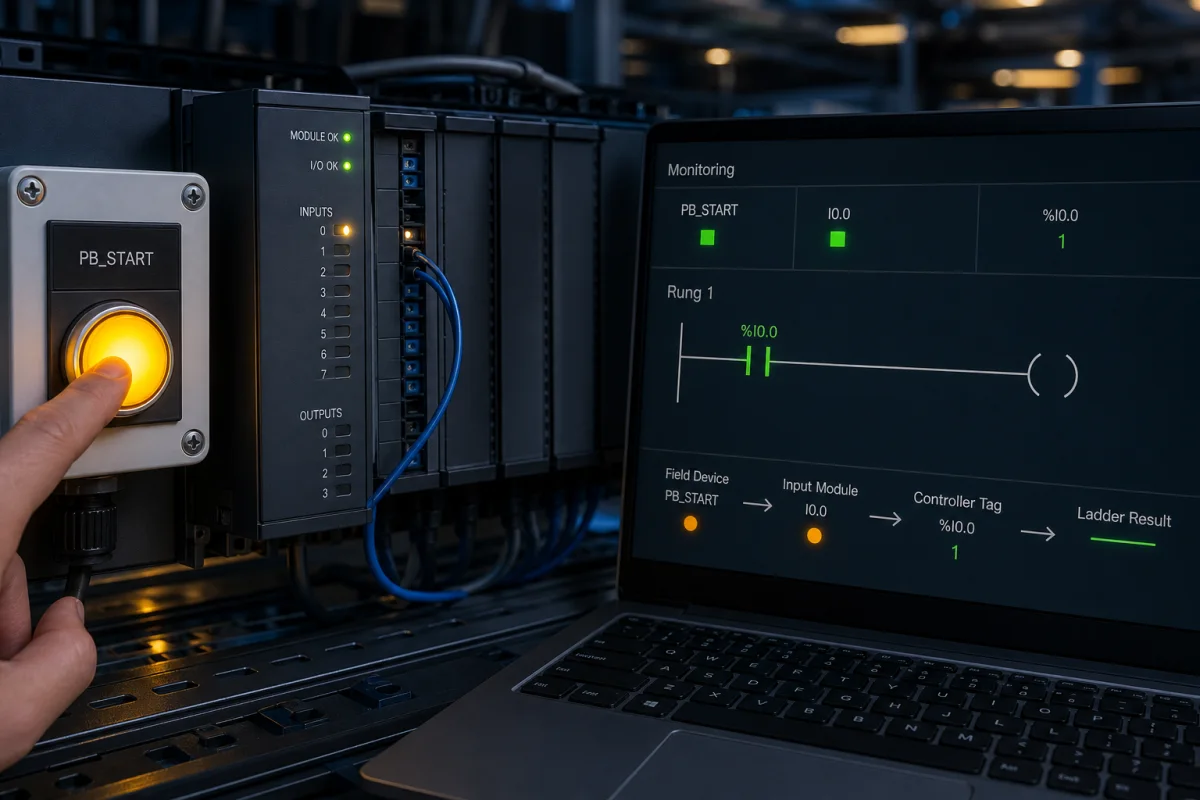
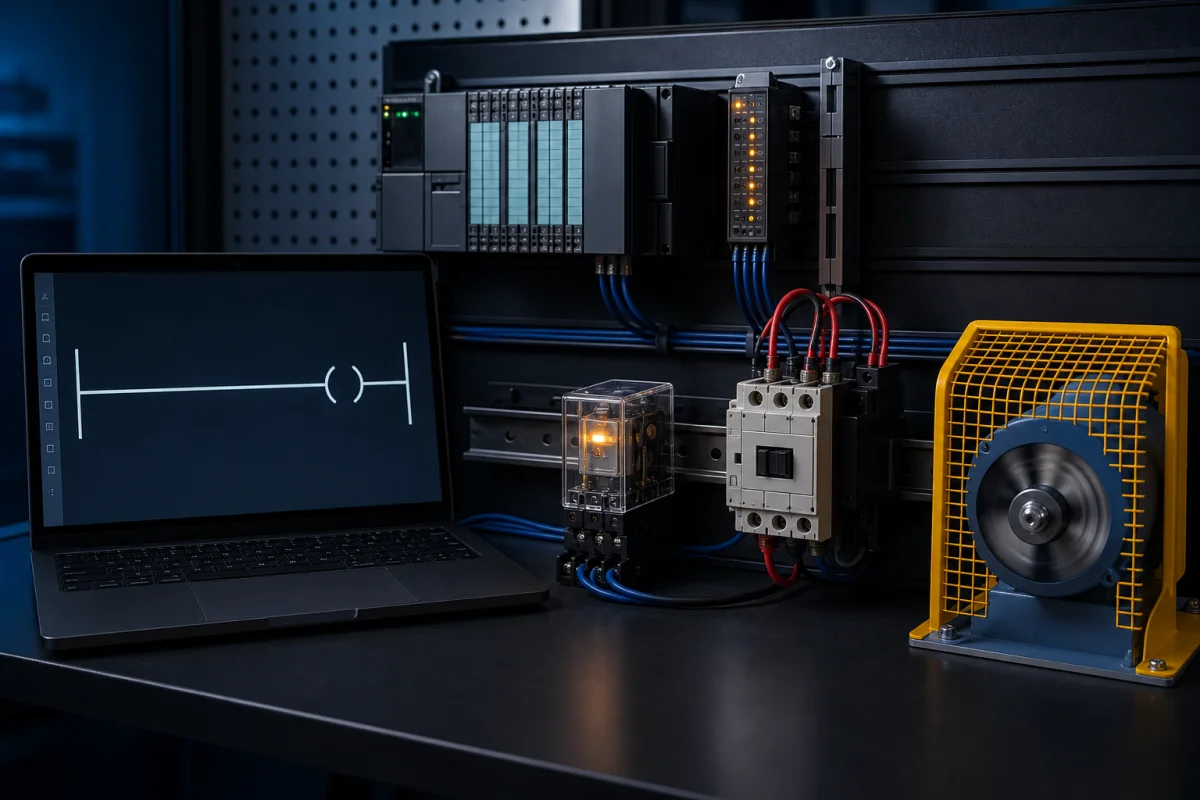
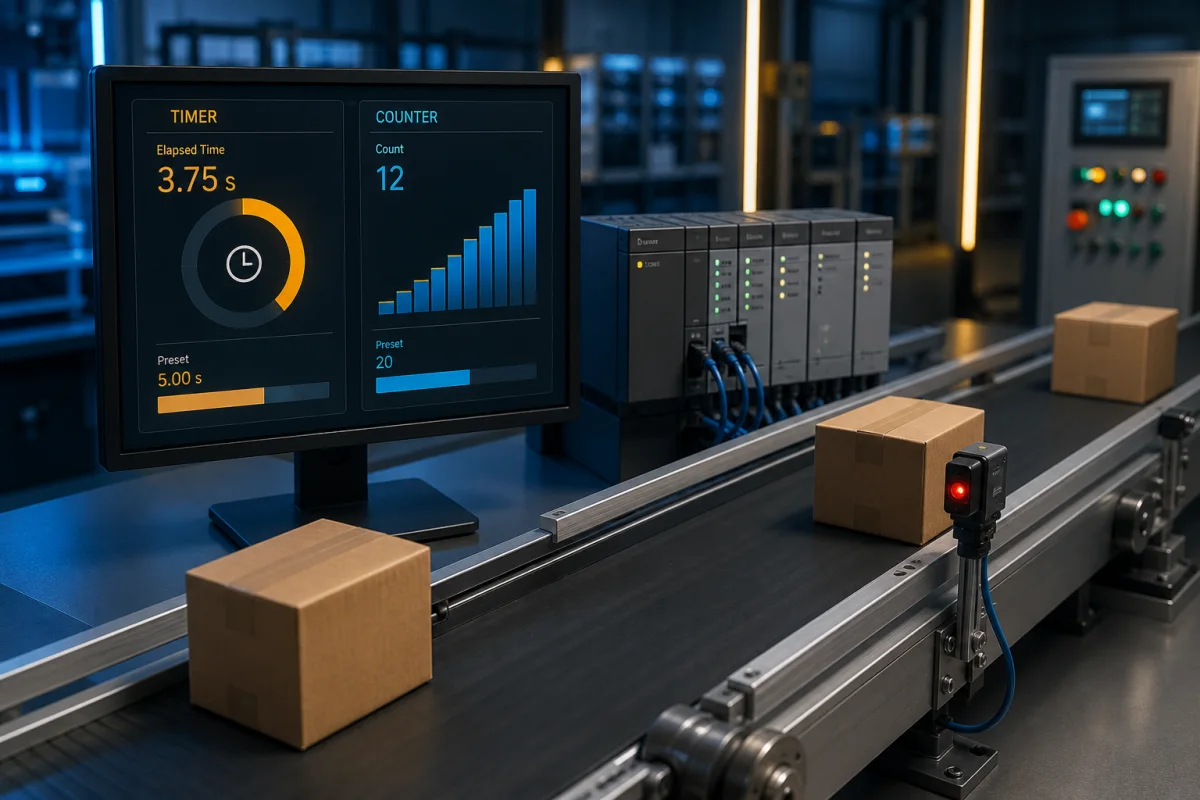
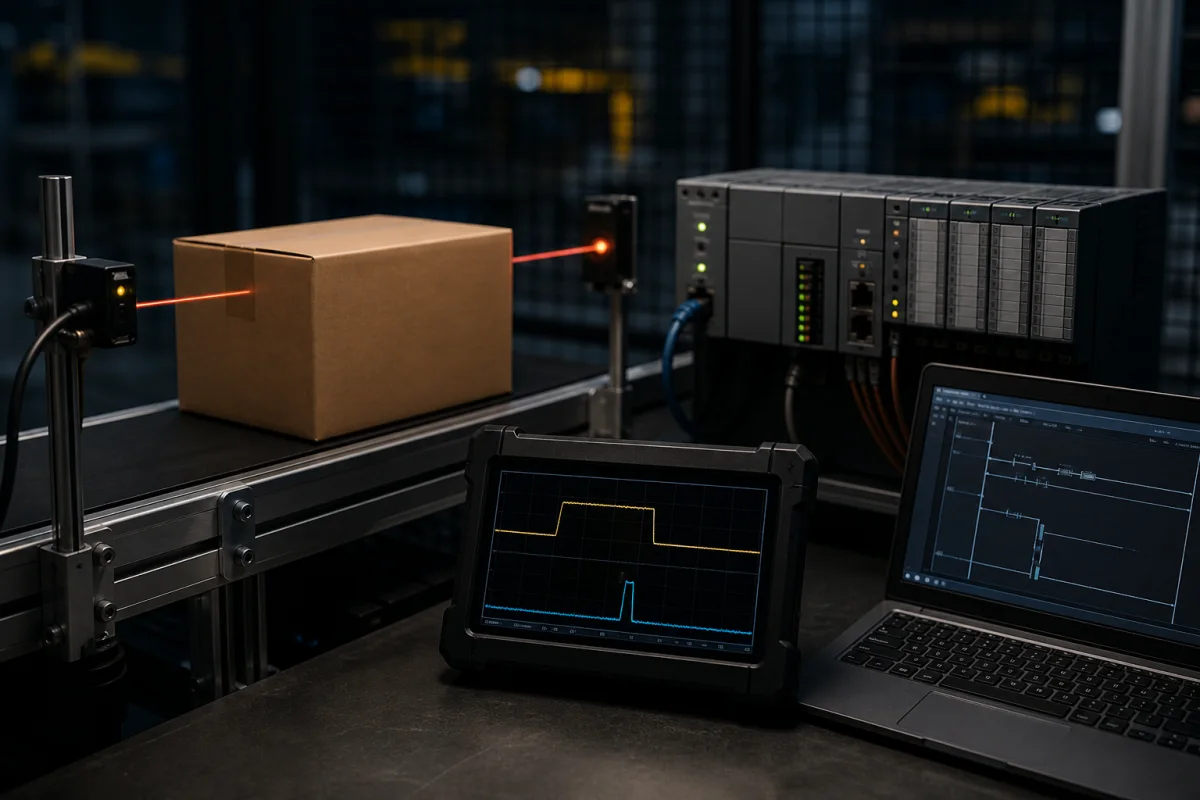
PLC platforms share control concepts inherited from relay logic and computing, but they do not expose one universal instruction set. Allen-Bradley's Studio 5000 uses mnemonics such as XIC, OTE and JSR. Siemens and IEC-oriented environments use graphical elements and function blocks with platform-specific details. Mitsubishi programming tools use mnemonics such as LD, OUT, SET, RST and PLS. Available instructions, parameters and runtime behavior depend on controller family and software version.
The transferable skill is predicting how Boolean state, transitions, retained values and task execution affect a machine. Comparable contacts and rising-edge detectors solve similar control problems, but they are not automatically interchangeable: storage, prescan, enable, scope and update rules can differ. Use this guide to build a mental model, then verify exact behavior in the target vendor's documentation.
Each instruction below gets its own page: what it does during the scan, a ladder diagram showing it in context, a timing diagram where behavior is stateful, the vendor naming table, two worked examples and the mistakes that actually bite people in the field. Start with contact-and-coil behavior in the no-account browser exercise; after signup, the scenario catalog covers broader instruction combinations in practical machine contexts.